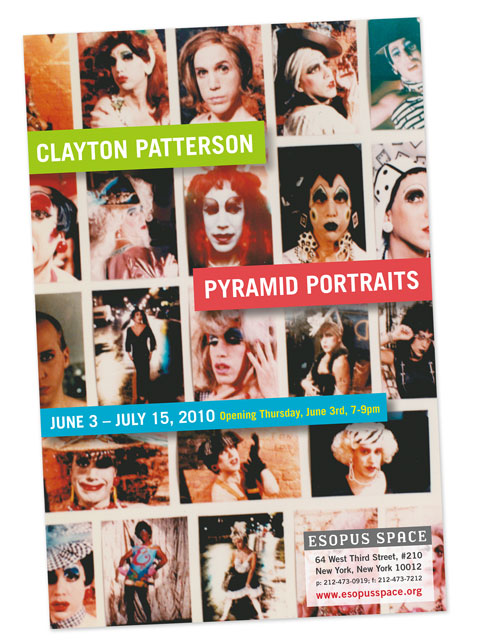
Esopus Space, New York, NY, June 3–July 15, 2010
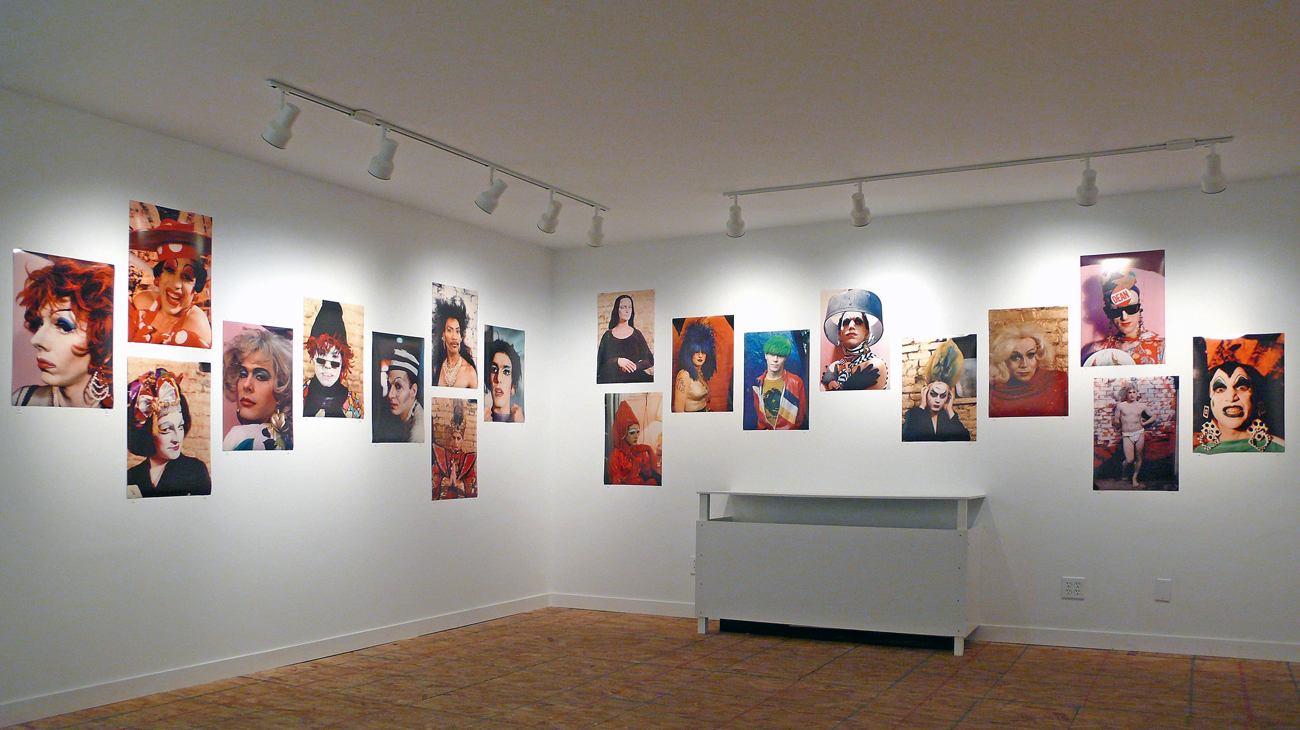
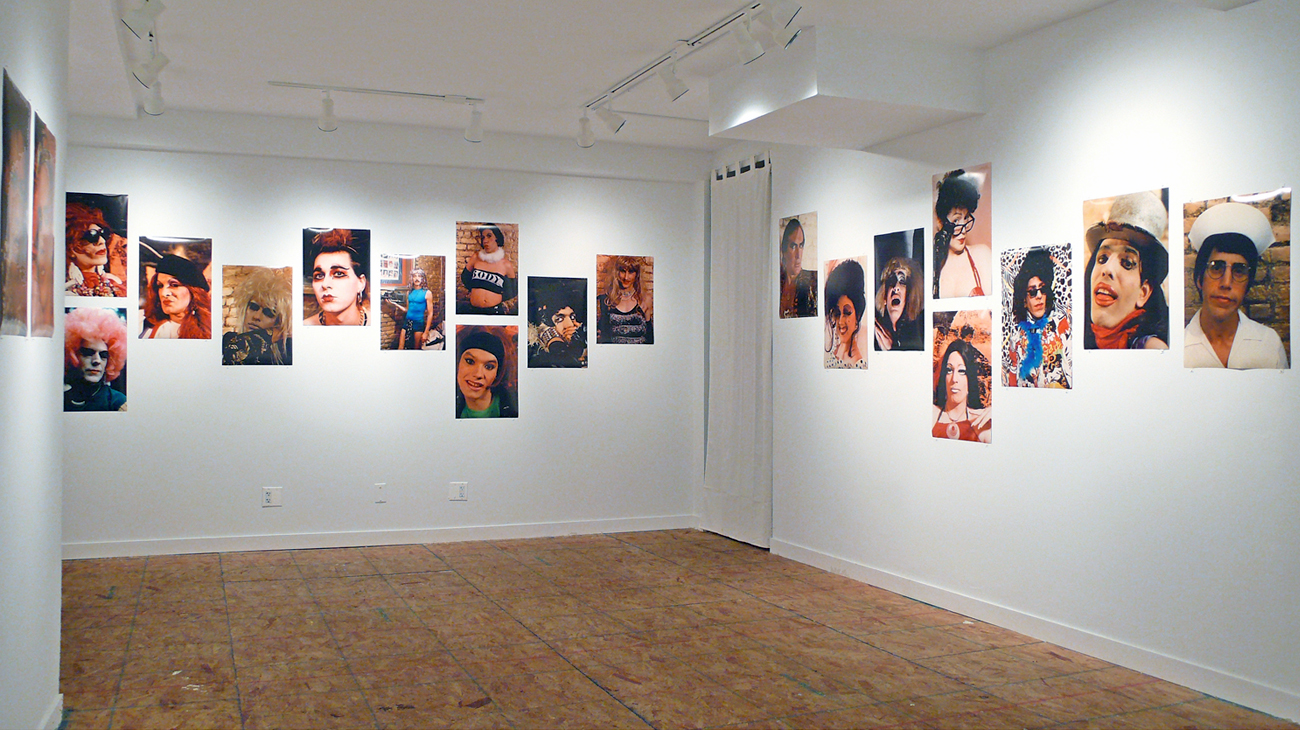
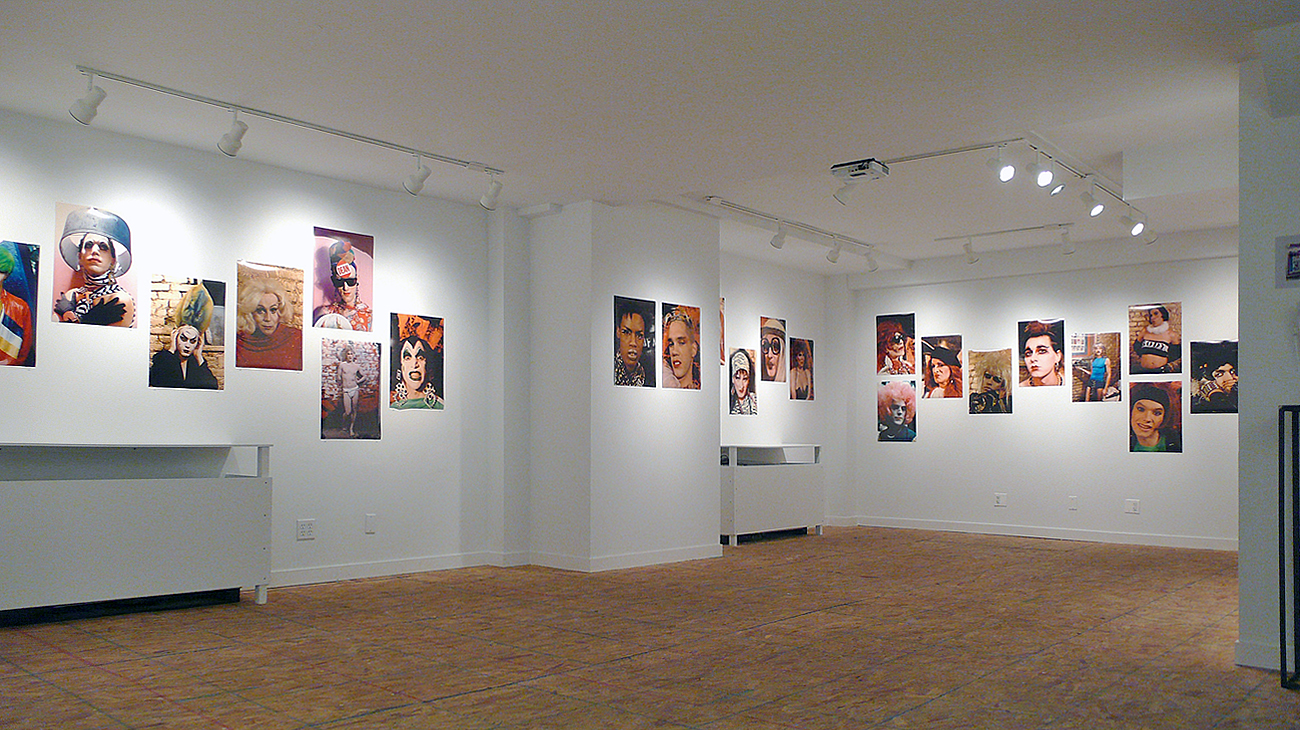
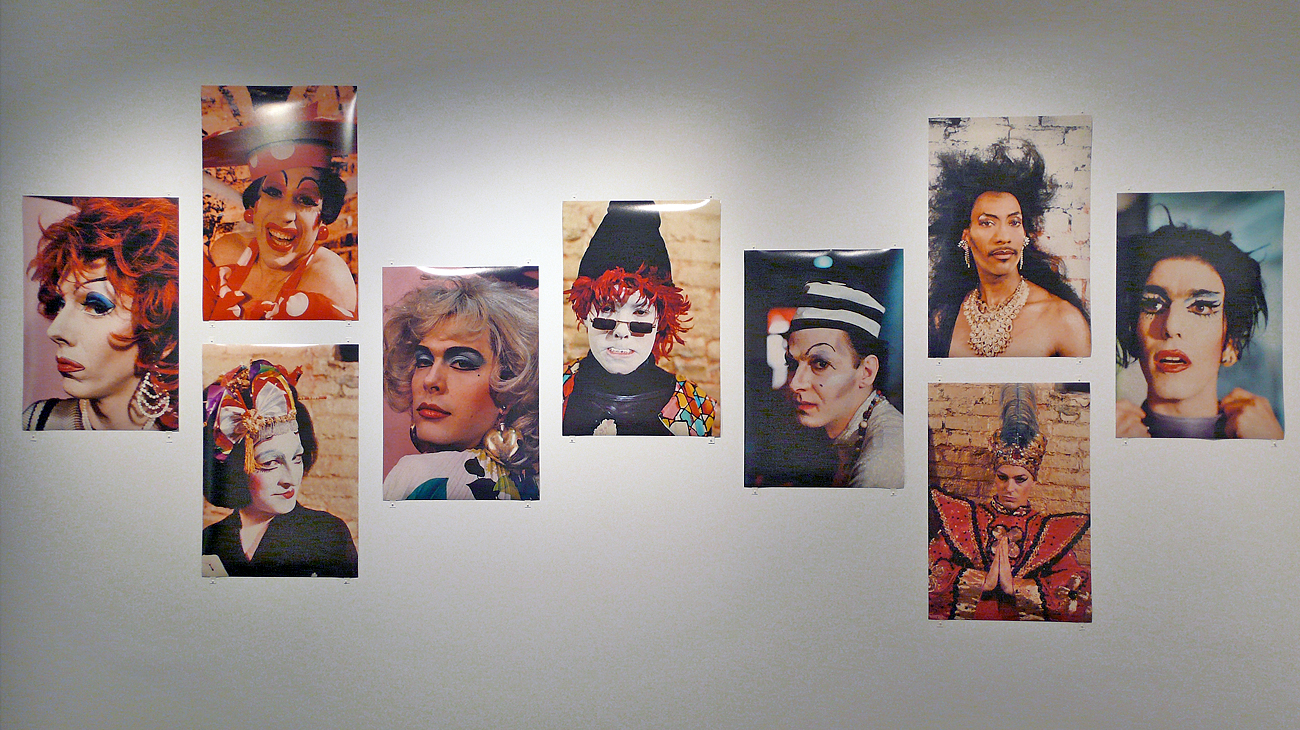
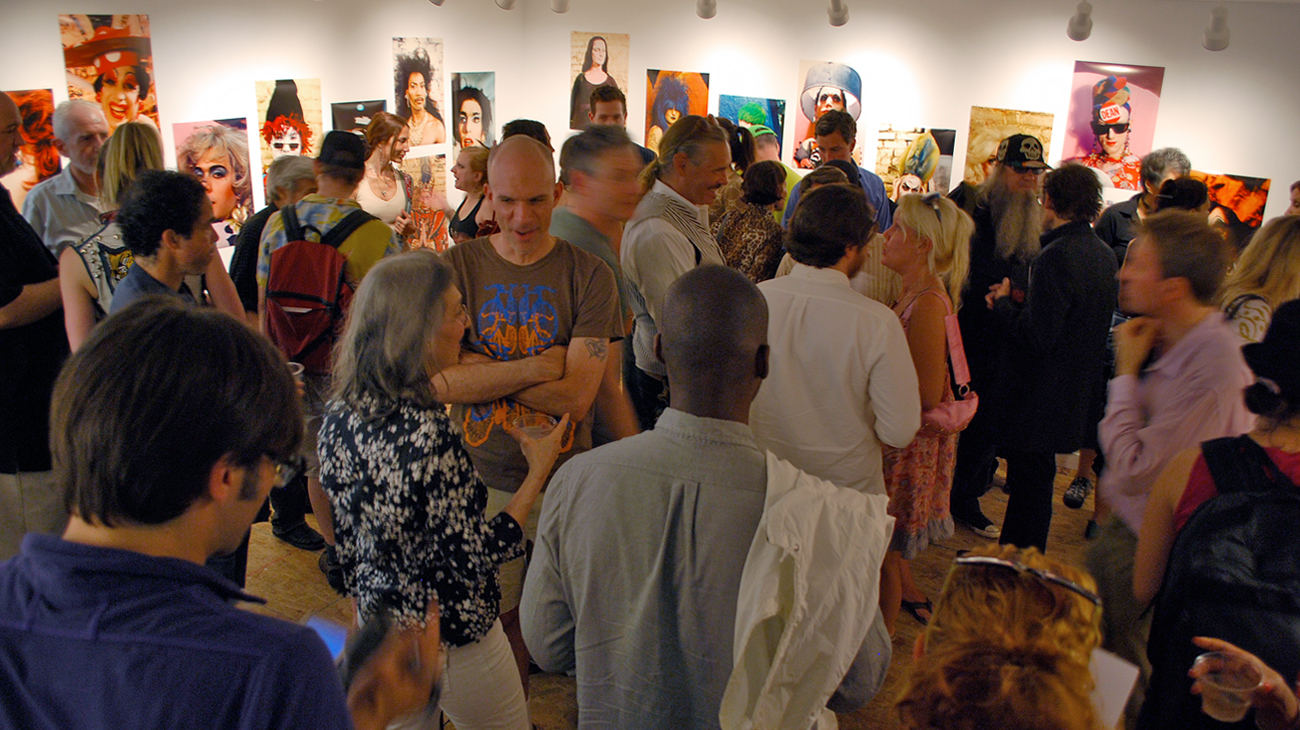
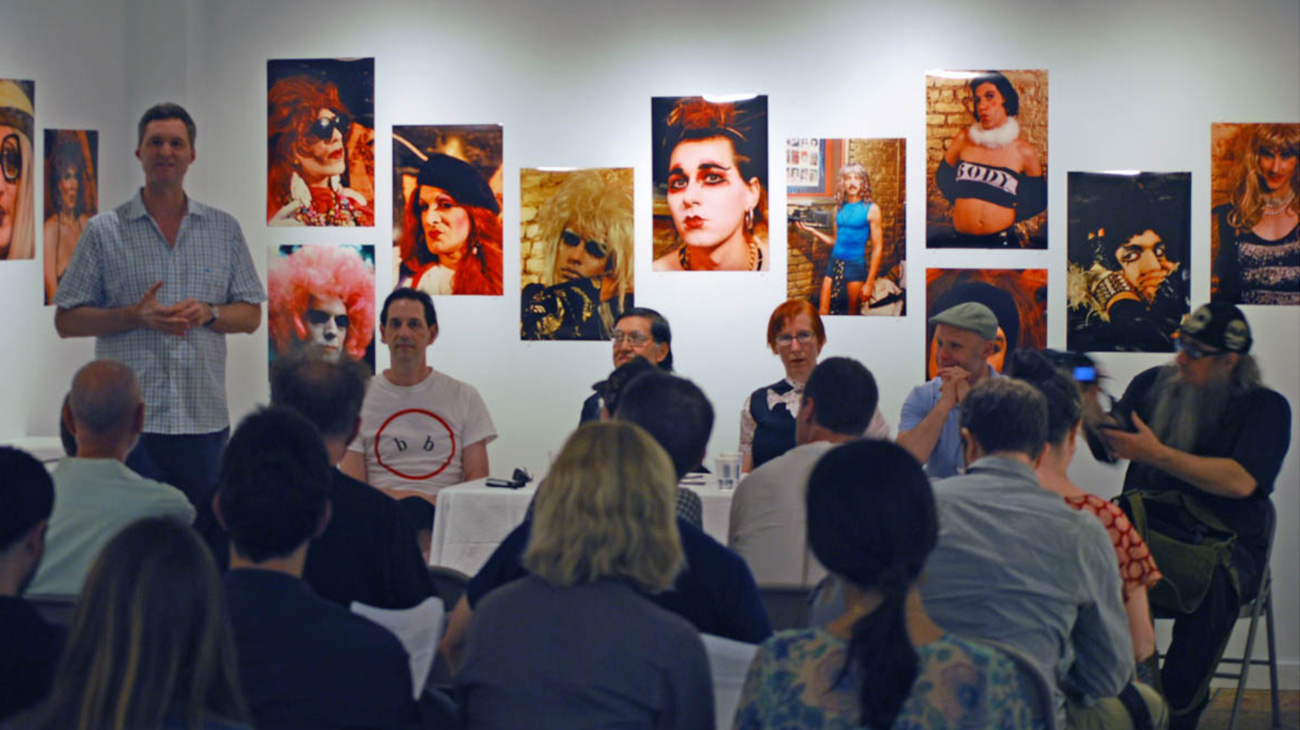
This exhibition debuted never-before-seen photographs taken by artist, documentarian, and community activist Clayton Patterson in the mid-’80s at New York’s legendary Pyramid Club.
Clayton’s subjects were the extraordinarily inventive drag performers who created the “Whispers” cabaret every Sunday night at the Pyramid, located at 101 Avenue A in the heart of the East Village. Like his countless portraits of hardcore punks, squatters, junkies, rabbis, tenement dwellers, and beat cops, these photographs document—and celebrate—the denizens of a dynamic, radically diverse Lower East Side, a community that would soon be decimated by the AIDS epidemic (and in the ensuing years, by relentless gentrification and development of the neighborhood).
“Up to that point, drag had been about referencing movie stars like Bette Davis or Judy Garland,” notes Clayton in an interview I conducted with him for the exhibition, “But the queens at the Pyramid Club invented entirely fictitious characters.” Those characters, embodying everything from space aliens to goth punks to suburban housewives, were created by performers including Tabboo, Hapi Phace, Sun PK [also known as Peter Kwaloff], RuPaul, Maze, John Sex, and International Chrysis, all of whom posed regularly for Patterson’s portraits. The photos, which were taken in in the dressing room of the club over the course of several years, chart the boundless creativity of these artists, who, with little or no money, managed every week to create new personas, each one more outrageous and compelling than the one before. Clayton calls his subjects “availabilists” (after the term coined by performance artist and musician Kembra Pfahler) who utilized everything from shards of broken safety glass to abandoned lampshades to create the ultimate artworks of the period—themselves.
An opening reception was held for Clayton on June 3, 2010, and “Free Zone: The Pyramid Club in the 1980s”—a related panel discussion with Clayton; performer Agosto Machado; Greenwich Village Society for Historic Preservation executive director Andrew Berman; and performance historians Joe E. Jeffreys and Iris Rose—took place on June 30, 2010.
A selection of these photographs were also published in Esopus 24 (2017).