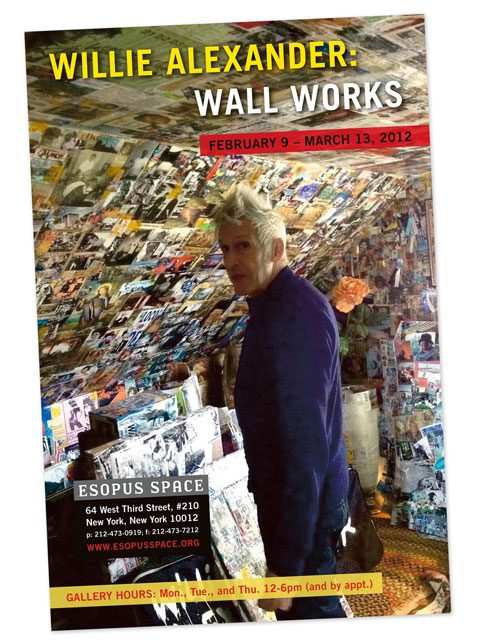
Esopus Space, New York, NY, February 9–March 12, 2012
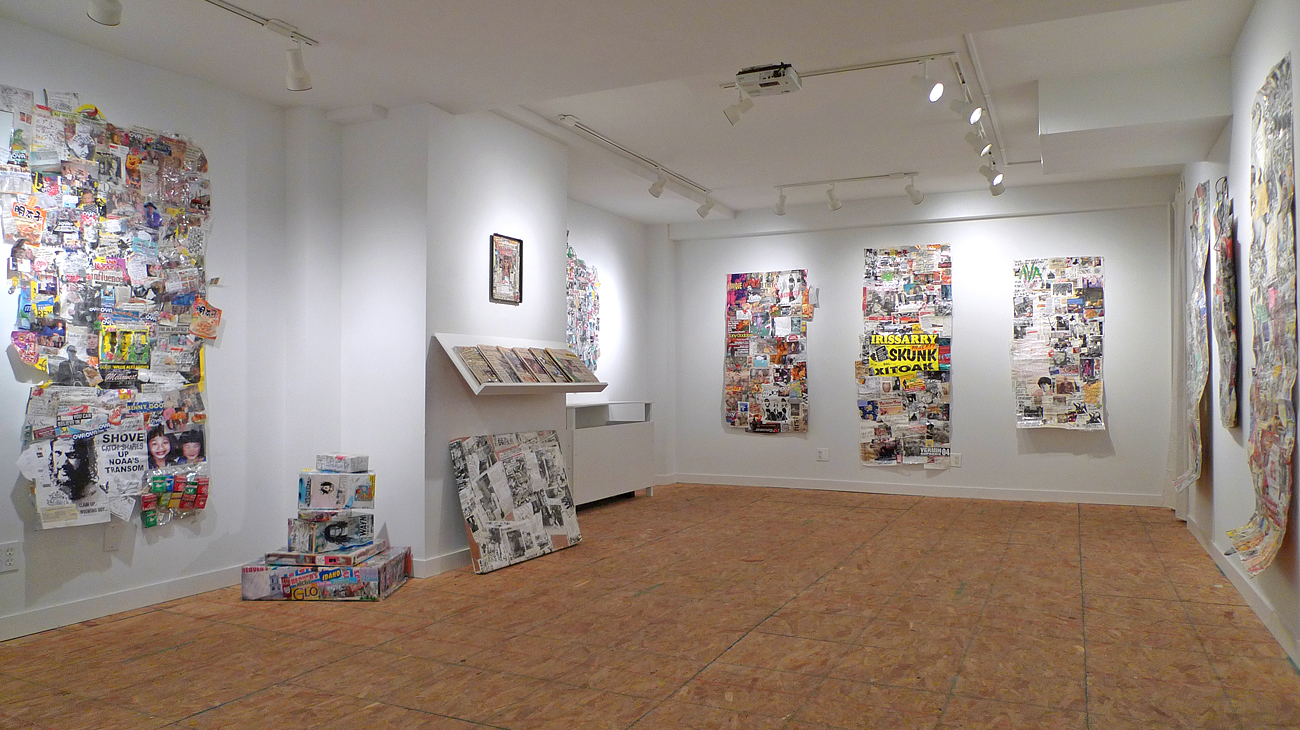
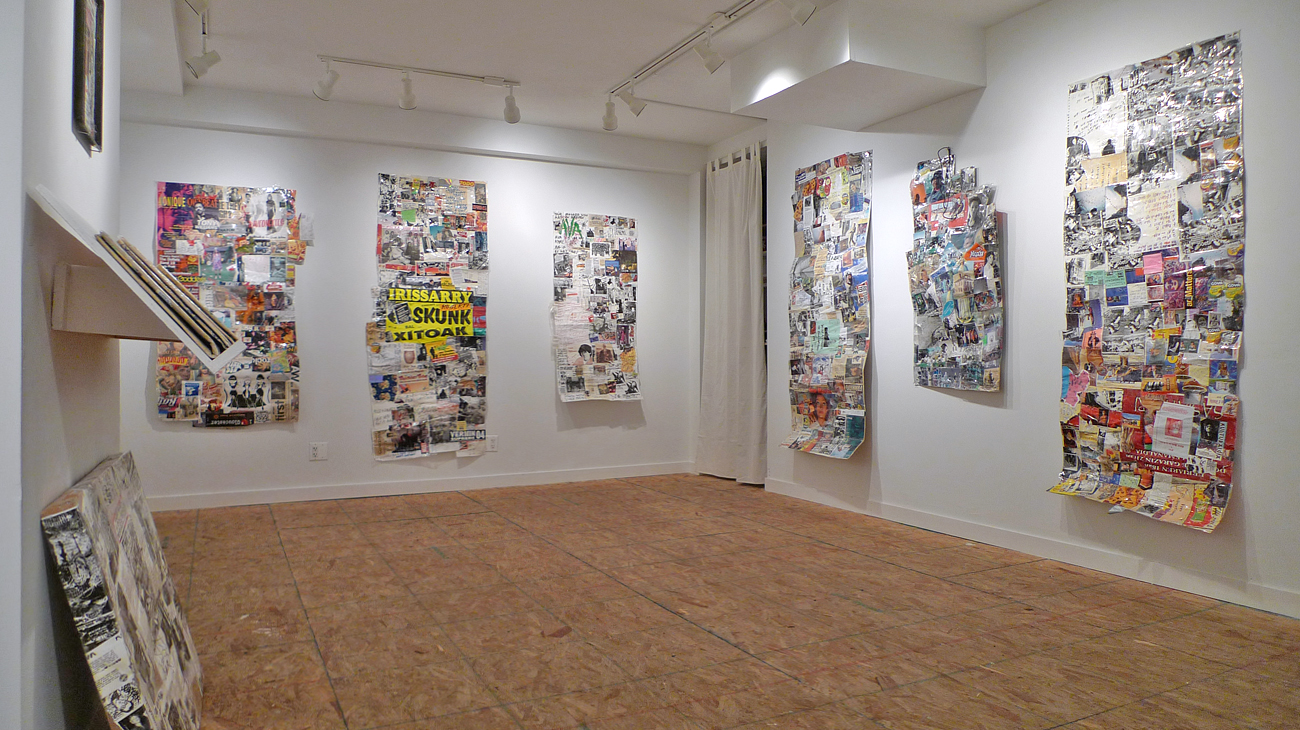
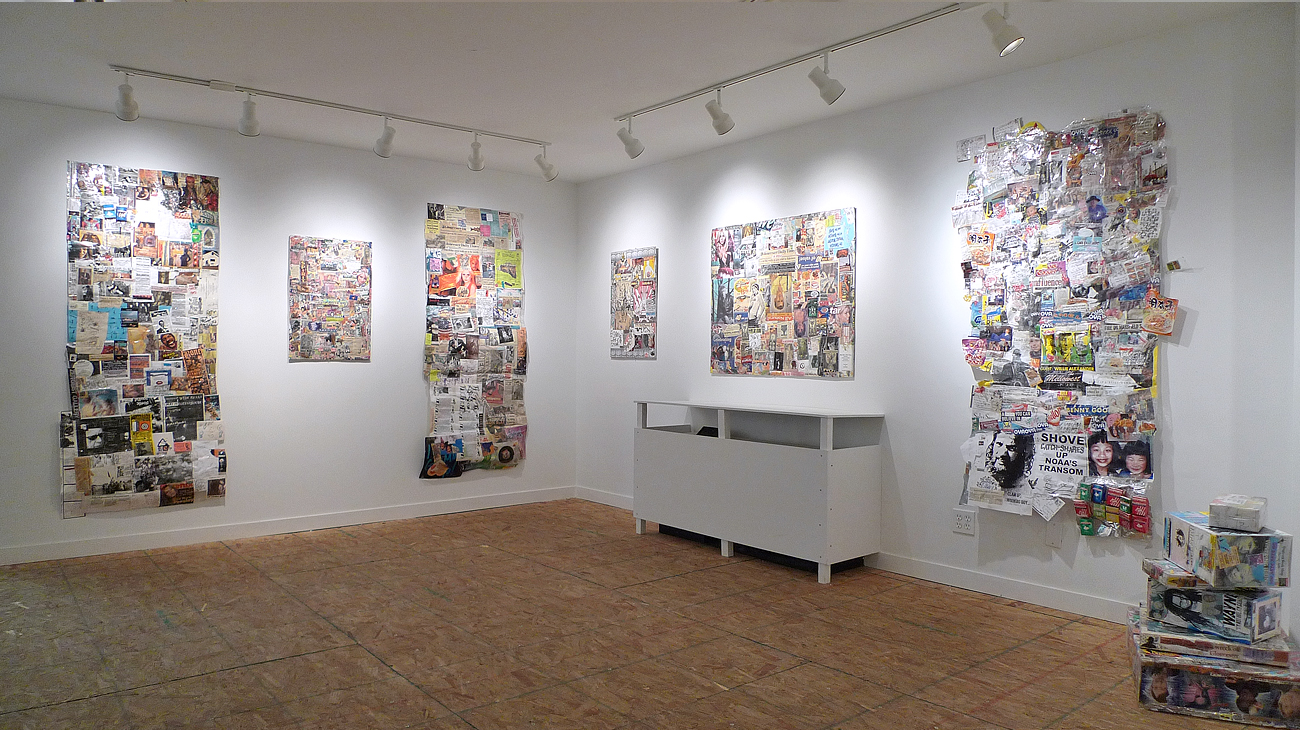
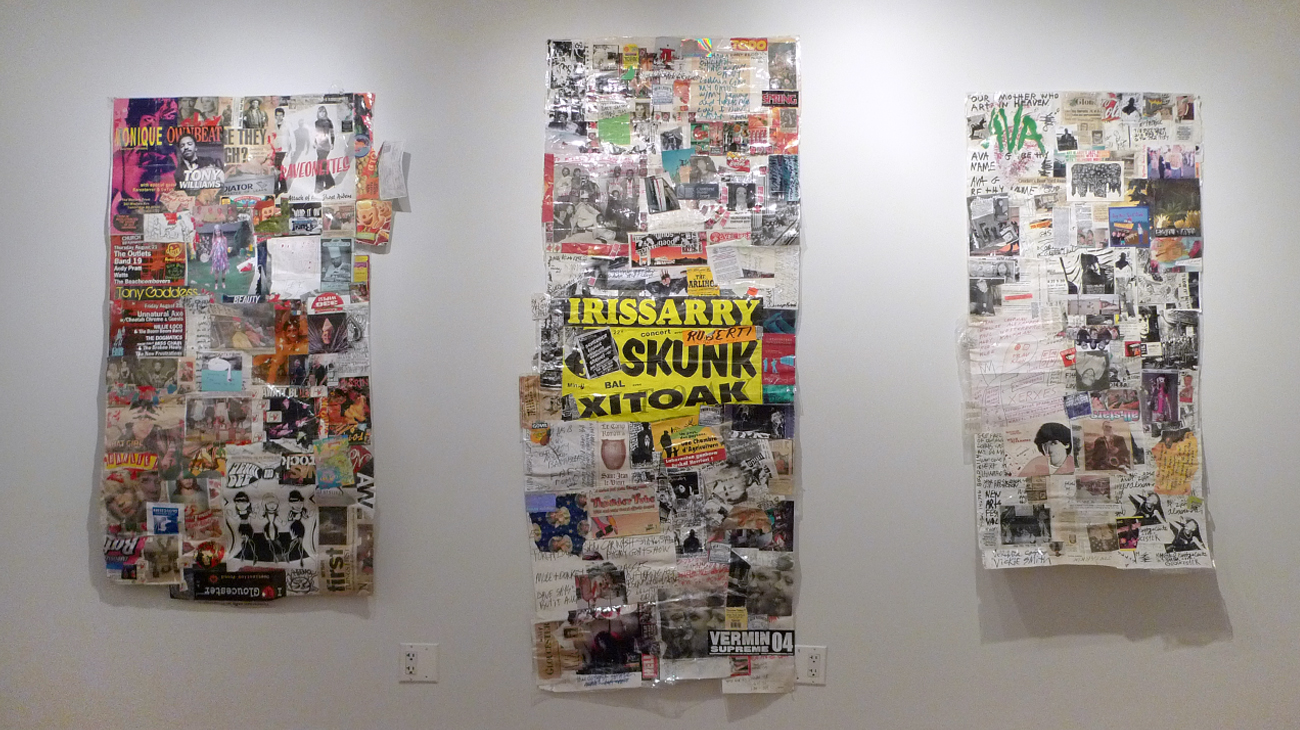
Willie Alexander taped his first object—an iconic portrait of James Dean—to his bedroom wall in Rumford, Rhode Island, when he was 13 years old. It was soon joined by images of Marilyn Monroe and innumerable nameless starlets torn from the pages of Hollywood gossip magazines left to him by babysitters. In his late teens, Alexander moved to Boston, where he briefly attended the School of the Museum of Fine Arts before becoming a seminal figure in the city’s burgeoning rock scene, ultimately replacing Sterling Morrison as keyboardist for The Velvet Underground in 1971. While on tour, he kept elaborate journals, using found ledger books and conjoining song lyrics with musical ideas and personal musings, over all of which he continuously taped the ephemera of daily life.
In the 1990s, Alexander and his wife, photographer Anne Rearick, relocated from Boston to Gloucester, Massachusetts. Alexander began to incorporate clippings from local paper The Gloucester Times, combined with materials from his own life, into full-scale newspapers assembled entirely with clear packing tape. Not long after, Alexander returned to the project he had begun many years before: covering the walls and ceilings of various rooms in his house with newspaper clippings, posters from various international concert tours, cat litter packaging, and anything else that could be taped down. When a surface was finished, Alexander peeled away the wall-sized collage that had taken shape, put it away, and started again. His practice, a unique combination of performance and installation art, has continued uninterrupted to this day. “At night,” Rearick notes, ““I hear the rrrrippping of Willie’s signature packing tape and wonder what’s going up next. One room is completely covered with images, from ceiling to floor, and the closets are full of walls that have been removed and rolled up to make room for more."
Alexander’s wall collages were shown for the first time at this Esopus Space exhibition. As my co-curator, John Jacob, put it, “They are living artworks, changing from day to day as Willie interacts with the world and it sends back signals to him in the form of two-dimensional visual flotsam. But they also represent a kind of pattern-building, an obsession with layering, that parallels his long-term work in music and more recent work in video. They’re the culmination of the project he started as a child, and now function as wall-scale crazy quilts from a truly amazing creative consciousness.”
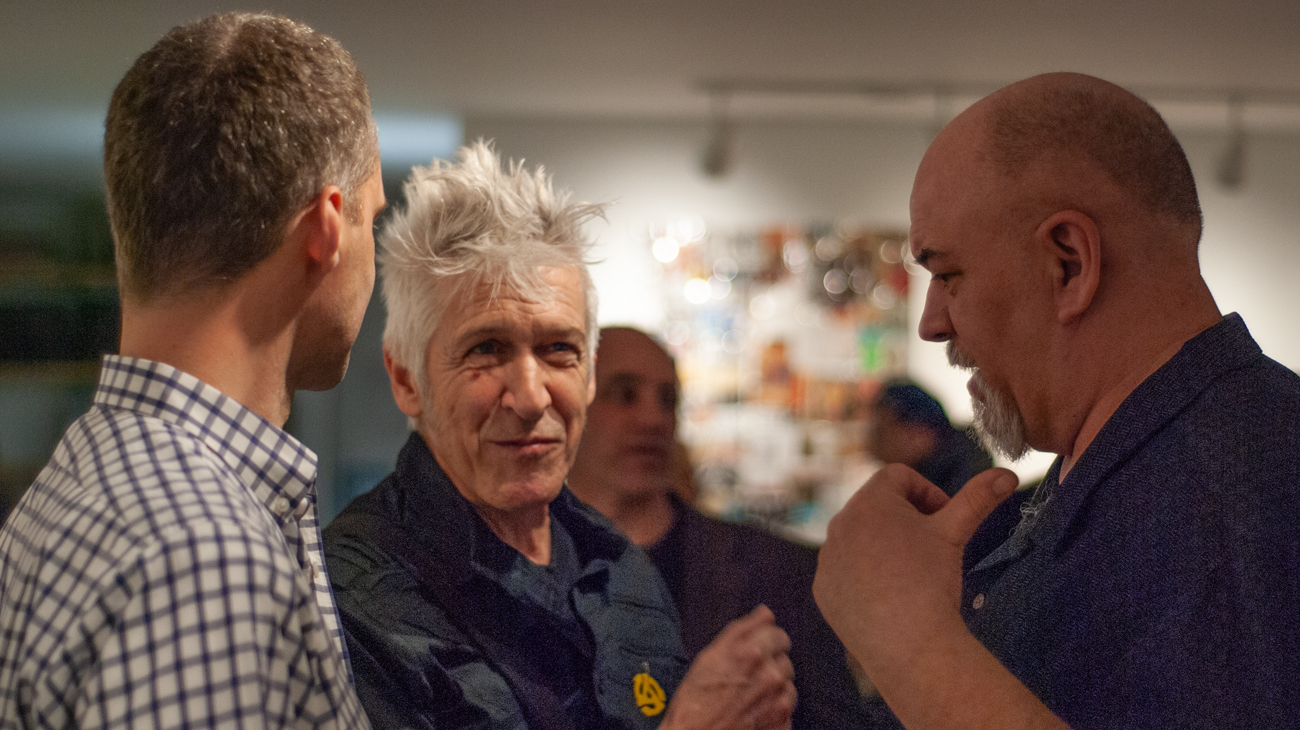
An opening reception for the exhibition, with Willie in attendance, was held on February 15, 2012.