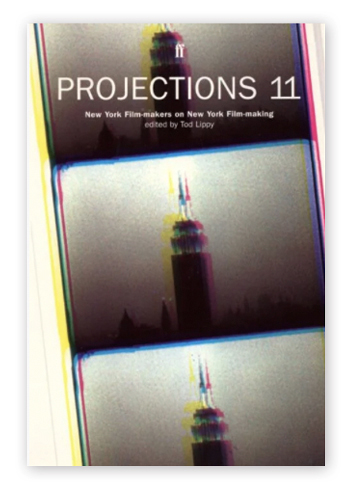
Originally published in Projections 11: New York Film-makers on New York Film-making (London: Faber & Faber, 2000), pp. 309–321

Tod Lippy: When did you come to New York?
Karyn Kusama: I came here when I was eighteen to go to NYU Film School.
What was NYU like?
It was a mixed blessing, because it’s such a huge school. I didn’t realize how big it was going to be and how unfocused, frankly, so many students would be at the undergraduate level. I kind of thought everyone who arrived at the school was going to feel very certain about wanting to be a filmmaker. I have no problem with people changing their minds midstream and going on to become dentists, [laughs] but they take up a little too much class space, in my opinion. But at the same time, I did have a couple of really key teacher/mentors who understood me and encouraged me. I think at any big private university, you really have to look for that support, because there is a huge financial incentive to just keep churning out the students. So I found that I had to aggressively seek out the breaks, the teachers, the students that I could connect with, and be very cutthroat, in a way, about getting what I wanted out of this very expensive education. That said, I think I did.
The other thing that struck me about the students there was how, even at the time—over twelve years ago—there was such an interest in achieving a certain level of status or celebrity or wealth. That just blew my mind. I was just surprised at how many people wanted to make movies like other movies, had favorite movies that they wanted to make again for themselves. There was a real resistance—and I think this is reflected in the larger world—to your own ideas and your own expressive power. People were very afraid to be personal. And it strikes me that the filmmaking that we all grow up on as powerful filmmaking comes out of some deeply personal place.
Was the work you were doing more personal?
It was, and I felt that I kept having to legitimize my odd little movies that were very influenced by experimental film and documentaries—I think you get a kind of weird fighter spirit after doing that over and over.
What kind of films were you looking to for inspiration?
Well, I had taken a really formative class early on in school called “Underground Film,” which I believe was sort of a one-off that year. It was taught by J. Hoberman, and I believe it was the first class he ever taught, so he was really sort of in this zone of, “I’m just going to show you work you’re not going to see in the rest of the school.” So we saw stuff by Jonas Mekas, we saw Joseph Cornell movies, of course Stan Brakhage and Kenneth Anger and Jack Smith and some Warhol movies. It was a really great thing because it made this progression all the way through to George Romero and John Waters and David Lynch. What was largely absent was work by women, but there were some films by Beth B. and Vivienne Dick, who I thought was really incredible. Of course, some of the kids in my class practically spit at the screen—they had no patience for most of it.
And then there was a documentary class taught by George Stoney. I saw some great Michael Roemer films, and other films by a couple of women. I hadn’t seen documentaries like that. I’d always thought of them as this sort of PBS, rarified, factoid world, and the class opened my mind to what documentaries essentially do when they’re good, which is that they find the story at the same time the audience does. So that’s what I’ve been trying to make my filmmaking do on some level. It’s never been a mandate, but it’s been an interest of mine. So I was very lucky to see those movies.
Were the films you made for school documentaries?
One was a documentary that I shot on film that was in that “personal documentary” realm, just about all about these fresh, raw friendships that I had developed over two years, and how some of them felt very stable, and some of them felt extremely unstable and a bit unhealthy. I look back on it now and I can’t believe I made it because I just filmed my friends and then put in this voiceover that dissected the relationships. I was really working in the unconscious. I didn’t understand the power of the medium, which was a good thing, I think, but sometimes you just unearth stuff you shouldn’t really unearth. One girl wept in class after I showed it and I thought, “Wow, I guess it meant something,” but then somebody else said, “How could you do that to people in your life?” And I was just like, “I don’t know, it didn’t occur to me.…”
That was my first thesis film, and then my second one was a much more narrative film, but it was part of an experimental narrative workshop which I had taken with this teacher named Pat Cooper, who really encouraged us to find the narrative logic of our expressive realms. So that even if you’re kind of going into a dream logic, make it somehow resonate on a plain emotional level. If I hadn’t learned some of those formative lessons, I wouldn’t even be able to write or explore anything. So here I am bashing NYU, and as I keep talking I realize that I got a lot out of it.
Were you seeing many films on your own at the time?
Oh, yeah. When I first moved here, the Thalia Soho was still a functioning rep theater. Actually, I had always gone to a lot of movies as a child, often by myself. There was a great theater a lot like the Thalia in St. Louis, where I grew up. I remember one weekend my parents dropped me off at like 11:00 a.m. and picked me up at around 6, because there was a triple feature of Splendor in the Grass, McCabe and Mrs. Miller and The Parallax View. It was like a Warren Beatty weekend, and I went for the whole stretch of it. In retrospect, the best thing about it to me was not understanding a lot of it—being too young to really comprehend themes.
Intuiting that there was something there you weren’t getting now, but would get at some point?
Exactly. It’s like the surrealists making a point to walk into a movie halfway through—once the plot made any sense they would get up and leave. That’s probably sort of how I felt the whole time that I was sitting and watching these movies, because they were simply too mature for me then, but they made impacts in more abstract ways—like single images. I think of seeing Warren Beatty alone in the snow in McCabe and Mrs. Miller, not understanding the scope of the story at all. Or I just think of how physically dark The Parallax View was, how hard to see it was.
And when I got here, New York was great because there was still that excitement around older movies, almost a sense of preserving movies in some way. It’s been really interesting to see how those theaters disappeared—were just kind of decimated—and now are sort of rising to the surface again. But I think it’s still going to be a struggle. It’s weird to me to think that a little town like St. Louis had theaters like that and now doesn’t have any—not one. Which is sad, because it’s our last link to being educated in a way.
And VHSs or DVDs are never the same.
I know. I just recently learned the difference between alpha and beta waves, and I was so shocked that alpha waves, which come out of film, sort of trigger the active part of your brain—I don’t really know the science of it. Beta waves are what come off a TV screen or off a video projection. And beta has the opposite effect, it triggers into your passive brain. That’s scary, because think of how many people decide on the Academy Awards watching those goddamn Academy screeners. [Laughs.] Or just think of how few people who make decisions about who gets money to make movies even watch them on the big screen.
Why did you decide to stay in New York after you graduated?
I think street life is a really key element to living. The first moment I set foot on New York City pavement, I was like, “Okay, I’m home, I know what’s going on with the world because I’m being faced with difference.” It’s easy to be lulled by enclosure and isolation in the suburbs or in areas or cities where there’s so much segregation. That’s the thing about St. Louis—it’s so segregated. I mean, there were kids bussed into my school from the city, and it was like, “Okay, I know Black people exist, but why don’t I ever see them in my neighborhood?” That shit drove me crazy.
It’s such a miracle to me that New York runs as well as it does. I’m always amazed that people don’t open fire on each other or kill each other with butter knives. I think it’s because there’s a lot of generosity in people here, and in a funny way, despite the complaints—many true—that it’s a hard city to live in, I think people here ultimately are trying to work together. They’re really interacting. I was just thinking about all of this, because I recently had a trip out to L.A. for the first time in maybe six years, having to do with the sale of the movie, meeting some new people and all of that. And I was so stunned by how much time I spent in a car; how much time I spent alone, with no ability to reach beyond the confines of the vehicle. It started to depress me. And I know there’s a secret to it—you should only be driving when there’s no traffic, and of course I was driving at the worst times of day and all that stuff, but I couldn’t believe how bad it was, that there’s just constant traffic. New York is full of traffic, too, but it’s a constant traffic of energy, and that energy moves.
How did you become an assistant for John Sayles? Is that a job you took right after film school?
It was a while after, because I had gone into film right after school, editing and working mostly in documentary films, and actually meeting interesting people, but never really finding a sort of “mentor”—you know, a person who could give me a real clear sense of what the various avenues of the industry were. And I was also writing a screenplay with a partner who died midway through. That was kind of a devastating experience, and I just started to feel like, you know, “This whole industry is bullshit.” I was feeling very, very cynical, so I left it altogether to take care of kids and do work painting houses—getting back into the life that isn’t film.
I was looking after some kids whose parents worked with John, and I met his assistant, Martha Griffin—who is now my producer. She was leaving the position and thought I might be a good match for John. We hooked up and I met with him and got the job. I spent almost three years working for him, and it was a very formative, very enriching time. I’m still marveling at how different his way of working is from so many filmmakers, at least in the U.S. There’s no rush on his part to work with the “status symbols” of this industry, and even though we have entirely different aesthetics, and sometimes very different concerns, I’m so impressed by his intentions and his execution and the way he works.
What do you mean by his “intentions”?
He’s not looking to manipulate a place for himself in the industry. He just exists and wants to continue to exist as a filmmaker. Maybe it’s because I’m younger, but I’m a bit more self-conscious, perhaps, about where I stand or where I might stand someday. I hope soon that I just don’t care. But it’s hard not to care, especially when you admire other filmmakers who have these bodies of work that stand up to time. That’s a really huge achievement, and I feel like there has to be some kind of cunning involved. I don’t think you can be this sort of naïf wandering through your own career—I actually think you have to fight very hard. So maybe it’s just that John is so humble about his fight.
What kind of work did you do for him?
I was in the office a lot, initially, taking care of the minutiae—the bills and the roof caving in and all those little things that sometimes he wasn’t even physically in town to deal with. After a while, I think, he started to share a little bit more of the decision-making with me. He’s always working on scripts that he was helping to rewrite or that he was writing for other companies—Hollywood stuff. And then he was always researching for his own next project. So there was always a dual mission. There were the relationships with the James Camerons and the Rob Reiners and the Ron Howards—this whole Byzantine world of phone calls and hierarchies and all that sort of stuff in the Hollywood system—and then there was the relationship with the New York Public Library and seeking out information and delving into a topic. Being involved in both was a really great thing for me, because I saw there is quite certainly more than one way to make movies. And one way just requires a lot of compromise, every step of the way. If I had to work with a big star, just the little curmudgeon in me would say, “It’s not a good thing that I have to cast this person. Who cares if they like the film, I don’t like them!” I have that kind of bristling thing toward it. So it was very interesting to see that process and then to see John working so organically in another direction toward his own work. He’s so story-oriented in terms of making choices. One of the things he encouraged in me while making Girlfight was to make choices that were really relevant in that regard—which really opened up the story and drove it. That’s not really my strong point, so that was great.
When did you first come up with the idea for Girlfight?
It’s a funny story. I had been boxing myself, and I sparred for the first time with this beautiful kid in the gym who, I admit, I sort of had my eye on. I was, like, “I can’t believe a person could be this beautiful.” And his name was Adrian.
The name of your protagonist’s boyfriend in the film. That’s funny.
Yeah. And a lot of the time he would literally wear green satin shorts—nothing else—and then a rosary. And I was just like, “Oh man, I am a goner!” [Laughs.] He was just too beautiful. So I sparred with him, because he wasn’t the kind of guy who was going to fuck with me and be “gentle,” but he also wouldn’t just whack me to show me a lesson. And I was being very tentative with him and he was being very tentative with me in the ring, and he got me into a clinch and whispered in my ear, “Hit me.” Like, “Don’t be afraid,” essentially. And I was so flipped out in a way because I think guys would do that to each other, also—they would say, “C’mon, don’t be afraid, let’s just go.” But the intimacy of it is really like a courtship, and I think that kind of skin-on-skin contact and the weird privacy of that space between word and ear is just so odd. Weird emotional exchanges really do happen in the ring.
Also, I was just struck by how many young guys really walk into the gym pissed off and unfocused and just begging for punishment or guidance or father figures, and often they find something from that process if they keep going, and they do change. And then, sometimes, they disappear—something pulls them back into the world that they are attempting to escape—and you never know what happened to them. That old story of those forties and fifties melodramas—“I want to be somebody, I want to get out of this neighborhood”—is real. And I just kept thinking to myself, when is a girl who is the sister of one of these guys, who’s just as pissed-off, as fucked-up, as unable to deal with problems in a manner that allows them to survive, going to walk in the door?
When did you actually begin putting all of these ideas together?
It must have been ’92 when I was starting to think about it. I almost don’t want to admit how long it’s been. But I didn’t start writing it until maybe two years later, and made a promise to myself that I would write it in three weeks just to get it out of my system. And I did. Such a different draft, such a painfully awkward piece of work. But it did contain a couple of simple things that were very basic to the story—the conflict with the father, the development of the relationship with the trainer, and then this sort of love that emerges within the confines of the ring.
It sounds like it must have been a pretty protracted process of rewriting that followed…
Well, it was hard for me to write while I was working for John, because I really had to make the time. And I spent a lot of time at the gym. There were days that I would go there and not work out, I would just spend the day there and watch all my guys play their dominos and see the relationships that walked in and out. Every day was exciting—every day, something insane would happen. It’s sort of a circus in a way—I think that’s what people complain about in boxing, and I completely understand that the purity of the sport really has been corrupted over the years in many different ways. But the fact remains that boxing is still a world where you can be yourself in some crazy way. Don King can exist as a businessman in boxing, you know? What a crazy, almost great thing. My mission, initially, was to just be accepted in this environment, because soon I was asking everyone questions and it became this ongoing research, but research based on friendships, which is a great way to work, a great way to get ideas. And because of that I think it came out so organically in the end—I was so close to my subject that I really felt like I knew what I was talking about on some level.
As you were writing, were you showing drafts to Sayles?
I think I showed John the second draft—he was always saying to me, “What’s going on with that boxing story?” When he first read it, he was so generous. He said, “This is a great story—I love that all of her issues that are happening in the outside world are getting crystallized and worked out in the tiny world of the ring.” But he also said, “I know she’s your main character, but maybe you need to focus on Adrian a little bit and figure out who he is. Why does he fall for her, and not just go for the trophy girlfriend?” Which is a very heavy question. So he really encouraged me to think in the direction of making each character a total character, even if they’re only there for five seconds, which is really great advice.
The successive drafts were also about giving more complexity to the relationship. One of the themes I wanted to work on was that kind of hormonal nightmare of adolescence. That’s such a fertile ground for building characters because they can do almost anything crazy, or make bad choices, and you believe it. And the fact of it, too, is I think we are so afraid to see characters just make mistakes or blow it a little bit. So I started thinking, “Okay, once they fall for each other, just on the pure romance level, it can be a real boy-girl teenage relationship, where it never feels solid or stable at all.”
When did you line up a producer?
Well, Martha was always producing it from the beginning. She and I had actually spent several years trying to find money for another project of mine—kind of a dark, perverse, unpleasant script that John had read previous to Girlfight. He said, “This is very well-written, but these are not the kinds of people I would want to hang out with for two hours.” But he did feel that it was strong enough for him to put his name on as an executive producer. So when he read the Girlfight thing, he said, “This is really what I think you need to do.” And so we went with what we thought was the more “commercial” fare. And my fear was and still is that it’s too commercial. But what can you do? It plagues me.
Anyway, money came together and fell through so many times that we just needed more support. And Maggie Renzi and Sarah Green came on as producers—they have a deal with Sony and are in a partnership called Green-Renzi—which gave us some more legitimacy to work with. And then John said he would invest into half of the budget as long as we stayed under one million dollars. And we thought, “Okay, now we can find the money.” And still it would fall through. I think it’s really because people just hadn’t seen this story before. I think the thing about a female in this kind of trajectory is really unsettling to people who invest money on tried-and-true formulas.
Is that sexism, do you think? Or is it more lack of imagination?
Perhaps studies will prove that there’s a relationship between lack of imagination and sexism. [Laughs.] But there was just this general sense of “Who is going to watch this movie?” The fact is, I still don’t know. But I think there is something undeniably appealing to a lot of people about it, because I think we crave women in more active, engaged roles in the world. I think men want it and need it as much as women do. We’re not all just living in this fantasy world of men somehow having a leg up.
Anyway, finally we got to a point where we were negotiating with somebody, and we’d gone into pre-production because we were that sure, and then the financing just collapsed, literally a day before official pre-production was to begin. My DP and I had finished our last storyboard: “Well, you know, we made it through the entire movie—we storyboarded all 683 shots—too bad we’re not shooting it.” [Laughs.] That night I got home at like 11:00 and there was a message on the machine saying that John had gotten wind of this bad news and he was going to put up all the money until we found money from someone else. That’s just the kind of thing that—you can’t even measure the magnitude of that choice on his part. Martha and I think about it a lot. What if Maggie and John didn’t agree to do this, what would we be doing? I’d be scooping ice cream cones. [Laughs.]
What an incredible vote of confidence.
Yeah, but it’s a lot of pressure, too, because you’re suddenly dealing with his money. We said to him, “We’ll guard every penny,” because there was such a fear of fucking up—it was Martha’s first producing gig and my first directing and writing job. But yeah, it was great to have that vote of confidence. Also, once John was the person bankrolling the movie, his work philosophy was how choices got made. So I was an important voice in decisions that other directors wouldn’t even go near or get the opportunity to go near. I was able to really say, “Why can’t we spend money on this but we’re going to spend money on that?”—I could still be a part of that dialogue. I think it can really make you a better filmmaker if you can deal with it, if you can really not let it corrupt your creative process.
How did you find Michelle Rodriguez?
It was a long process. When we met with our casting directors—and this was maybe two years before we really found the money—I said, “You know, I want this character to be a kind of watershed cultural icon.” Which is a really heavy thing to say to a casting director. But I was thinking that, you know, people really felt like something unique was happening when they were watching Travis Bickle or Tony Manero or Stanley Kowalski. There is a tradition of a kind of presence that just sort of electrifies the screen and holds you captive. So I told them I wanted Brando as a teenage Latina. And they said, “Okay, we’ll find her.”
When we were finally really bankrolled enough to do the casting, we just had this steady stream of girls coming in to read for the part wearing push-up bras, and tiny little tank tops—when it was two degrees outside. I was shocked. There was an obsession with being small, an obsession with frailty, and it was just really interesting, because I never knew until I saw all of these talented, often very articulate young women coming in who had to literally sell their bodies. We read some great actors, but a lot of times there was a sort of polish, almost a finish, to how they interpreted scenes. Midway through casting, I just said, “This isn’t working.” We weren’t finding the girl who, like the character I’d written, can sort of take us or leave us, the girl with that kind of raw energy. So we did an open casting call, and Michelle emerged as one of the last people out of the 350 or so we saw that day. She was close to two hours late, and she kept cracking up during the reading—she’d laugh when she made a mistake and make these crazy faces like, “Oh, I’m such a fuck-up.” The minute she walked out of the room, I wrote her off. Then we went back and looked at the tape, and it was like “Ahhh!” She converted beta into alpha. So we brought her back, and she was late again.
I remember your mentioning her lateness problem after a screening of the film here at the Directors Guild.
She has a little bit of a different time sense, which really concerned me a lot initially because it was one of those kinds of things that made me think, “Is she going to show up on the set?!” I was sort of terrified about that. And the thing is, she had no experience, had never acted before. So I decided to just put her in the ring and see how she was physically. Within the first hour, people were coming up to me and saying, “We haven’t seen anyone like this in the gym in two years.” She learned so fast, and just had this animal pride—this unwillingness to be humiliated. Of course, for boxers, that’s something you want to train out of yourself, because it’s really important to know when you’re in trouble and to try to seek help somehow with whatever tricks you have. But that aggression was something a lot of the trainers noticed. People were so excited, and you could feel the bloodlust in the air. And I just knew I had to cast her. So then it became this thing of working on the script every now and then—because she trained five or six days a week for four-and-a-half months—and we were really able to take a long period of time and talk about character, talk about narrative scenarios.
The other great thing was, she read with all the other actors when we were trying to find the right match for her, and it seemed like every time she was learning something more just through the audition process. It also became clear that the actor who played Adrian had to be someone that she didn’t demolish on screen. I mean, she would just be standing there and it still would seem she was walking all over these guys. It was really interesting—we realized we’d hit the jackpot.
And I’ve got to say, she pulled it together and she had a focus, a natural ability. I’d say, “Michelle, stop climbing off the walls and singing the South Park theme—calm down for one second, we’re shooting in two minutes.” She would just be spazzing out on the way to her mark, and then she would get there and it was like everything would fall away and she was an actor. Actually, even more than an actor—she’s almost a “channeler” of some kind. She’s very raw in some ways and I’m sure has a lot to learn before her next movie, but I hope she gets a lot of attention from good directors because I think she’s a huge talent.
You’ve used the term “melodrama” when talking about the film, but I have to say that, despite Girlfight’s storyline, I found the style of the film to be much more in the vein of the cinematic realism of filmmakers like the Dardenne brothers, or even someone like Erick Zonca.
That’s interesting. I knew that would be a part of how people would experience it, but I think what I meant with “melodrama” was that this film, like the most expressive and interesting melodramas, has a clear emotional logic. You can watch a Douglas Sirk movie like Written on the Wind and you can think it’s insane and “out there,” but within the context of what it is, it makes perfect sense. And the big trajectory of the story is that people finally express what they’re feeling, and that everyone finally is in this kind of a fantasy zone where stuff gets released. I was interested in that in terms of Girlfight because I did see her narrative trajectory as being one from emotional paralysis to emotional openness and vulnerability. And all of that came from the opposing and parallel story of her finding focus for her violence and her rage and her aggression. So even if it wasn’t going to be big and “out there” in terms of my personal expression of those themes, I really feel that that desire to be noticed is a part of the melodramatic tradition.
I love the fact that, throughout the movie, we keep returning to those vaguely disquieting scenes at the dinner table with her and her brother and father. The apartment is literally the “home base”—physically and emotionally—for the whole movie, in a way.
I really encouraged the other two characters to be comfortable on some level in that space—less so with Tiny, her brother, but definitely with Sandro, the father. I wanted them feeling like they were where they belonged, no matter how untrue that was. Whereas with Michelle, I wanted her character to be someone who had presence to burn, but nowhere to put it. So in those scenes she was constantly hunched in this weird, almost cowering position—but she’s not someone who cowers…
Except in that context.
Yeah, definitely. That the home is not a place where she can be a developed human being, which I find might be something I’m going to explore a lot. I feel like that was the thing that kind of survived out of the family scenes in the script, because a lot of that stuff was overwritten—or not as well-written or clear as the rest—so a lot of it got peeled away. And the only thing that really seemed to stay was the discomfort, which is what I really wanted to try and preserve. I think we did an okay job, although the movie’s got problems [Laughs.].
What kind of problems?
Well, I would have liked to see even more of that coyotes-circling-each-other dynamic between the boy and the girl. Even more of a sort of overt fear of connection, with that overwhelming need for connection working at the same time. I think young actors see so many examples of that falling-into-the-screen-kiss stuff that they forget how awkward it is when it really happens, so I kept trying to get that awkwardness back in. But I felt at times that things were, even with the complications, still too easy. And that’s also a function of my writing. I think I should have explored instability a little bit more. That’s one thing, but there are so, so many things. The final fight I wanted to be a true battle of wills in every possible way—including, obviously, the physical—and we just didn’t have the time to really express that. We had two days in this enormous location filled with extras. It was really hard to shoot there.
That’s a lot of really tricky choreography, too.
Oh yeah. It was really tough. And mistakes happen. People get hit accidentally in a big way and feelings get hurt. And it’s heavy, because I think the two actors really had a lot of respect for each other and a lot of love for each other, which I think shows on the screen—but, you know, I was asking them to bring a lot of animus into the ring, and I think that was difficult for both of them.
But, in a Machiavellian way, that must be great, right? The characters they’re playing are experiencing those same emotions…
Oh yeah, absolutely. But it’s not pleasant while it’s happening. Both of them got hit “accidentally,” and it was one of those ugly moments where you say, “Wow, this is what this would really be like.” Anyway, that sequence is something I would change.
In those fight scenes, you did this really nice thing with the POV shot of either boxer, where there’s a white “flash” every time they get punched…
That’s John Sayles. When we were editing, I was saying, “I’m really frustrated, because I think the footage is strong, but it literally needs some ‘pop’ to feel impact and I don’t know what to do.” I didn’t want it to be a sound effect. And he said, “Well, there’s something really cheap you can do—just cut in a frame of white leader.”
Just one frame?
It’s interesting—every cut was different. Some were two frames, some were three, some were one. It just sort of depended on the flow of it. But we did it, and it really made a difference—really gave you that sense of being stunned. That was such an easy thing to do, and it cost, like, one cent. It also gave the film a sort of homemade feeling, like there was something unfancy about it. From the beginning, I really wanted to make the movie very bluntly—I didn’t want to get too poetic.
Girlfight won the Grand Jury Prize—as well as a directing award—at Sundance. Could you talk about the whole process of showing the film there?
Well, we submitted a rough cut—something on tape with no sound work, no music—and I was really horrified to do that. But it got accepted. I had high hopes for the film, but I didn’t necessarily think it would win any awards. Sundance was great because it got everything rolling, and it was a great forum for that first time to have five really enthusiastic audiences see the movie. But it was an exhausting experience for me—I really look forward to going to a festival when I either don’t have a film there or I’m not in competition. Because I felt like a monk or something—I couldn’t stay out late and I couldn’t drink because I had to always get up and deal with “the grind.”
In a sense, you’re playing out the ultimate fantasy of a first-director: Your film won significant awards at Sundance, you’ve gotten a distributor, Screen Gems, who’s clearly behind the film, and now you’ve been selected for the Directors’ Fortnight at Cannes. Is this anything you can honestly say you had prepared yourself for?
I think I did kind of hope for it at some point—whether this was the movie, I don’t know. It’s a lot of pressure on some level. I have these conversations a lot with prospective agents, and I’m sure they all think I sounded either pessimistic or insane, but I’ve told them all that a lot of my favorite filmmakers are the ones who have brutally failed, who have really gone off the deep end with a couple of movies and lost their way. Those are the most interesting filmmakers to me—the ones who explore what they’re doing deeply enough that they just fall flat on their face. The funny thing about this kind of moment for me personally is that it creates a certain sense of expectation about me—that I’m very craft-oriented or technique-oriented and very story-driven, and I’m not sure if I will always be those things. Sometimes the pure aesthetics is actually the story to me.
So in a way, the real pressure for me is to continue to explore what I want to do in a very complete way and create an environment for myself to do that—I think that’s going to be hard. But I want people to understand that I’m not going to be one of those directors who gets a list of people I can cast—List A, List B, List C. I’m not going to do that. I’m not going to be someone who will do a test to see if I should reshoot the ending, and I’m not going to have a board of 20 accountants tell me how to rewrite my script so that it’s more suitable for this or that demographic. Once you get those factors out of the way, I think you can get a lot of really expressive work made. But sometimes even the most expressive work, crazy as it is, beautiful as it is, fails. And I need to be reminded of those kinds of moments when I say this, because I really believe it. Of course, I’ve set this precedent now of experiencing some degree of success so early that it’s a little scary. I don’t know, though—I’m pretty resilient.
Who are some of your influences?
I’m really into Shohei Imamura. I just feel like he goes into this zany territory that is purely about his own obsession—and I just love to see people’s obsession get worked out on screen. For that reason I could say the same of Stanley Kubrick. I think a lot of his filmmaking was about control—or the loss of control—and that obsession is just explored right in front of you, which is so gratifying to see. Right now I’m going bananas for Claire Denis. I saw Beau Travail at Sundance the day before Girlfight premiered, and I just thought, “Okay, this is all I could ever hope for in a long career”—moments of purity and beauty, and buried tenderness. It really humbled me. Some Kurosawa films give me a whole new belief in narrative filmmaking. And Douglas Sirk—there are so many people that think it’s too campy and wacky, but god, I feel so much passion from his work. And I saw Velvet Goldmine, like, seven times in the theater. Todd Haynes is a real hero.
So there are those filmmakers out there that I go to for inspiration, and the best thing about all of them is that you never feel anything but the stamp of their personal cinema on the work. I’m not looking to brand my work particularly, but I do hope that a sensibility emerges where my natural concerns in life continue to get worked out in an organic way. I think the reason we don’t see distinctive work a lot of times in Hollywood is people always want to be working, so they just grab on to the next project that’s available that has a star attached—“We’ve got the money, let’s go!” That’s just no way to explore personal cinema. But you know, I’m a really work-oriented person, so of course I’ve been thinking to myself, “If I don’t get the next thing off the ground in the next year, I’m really going to start to lose my mind.” I want to be working on something right now. I want to be shooting in the fall. And the fact is, I’m not ready, and I know it.
I meant to ask you earlier; did you hit Adrian, the kid in the gym after he asked you to?
Yes, I think I did. [Laughs.] I did hit him, I granted him his wish. And it was probably pretty satisfying, for both of us.