Yesterday’s Mail: An Interview with Robert Warner
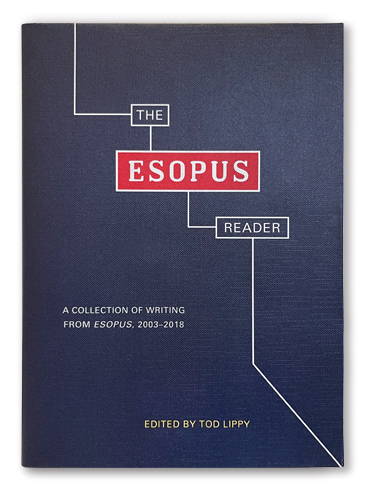
Originally published in Esopus 16 (Spring 2011); reprinted in The Esopus Reader (New York: Esopus Books, 2022), pp. 347–356

In the late ’80s, Robert Warner first came across a piece of mail art sent by the artist Ray Johnson to a mutual friend. Intrigued, he contacted Johnson, who called him a few days later. That phone call initiated an intense, fascinating exchange between Johnson and Warner that lasted until Johnson’s death in 1995. Over the course of their relationship, Warner received hundreds of pieces of mail art from Johnson, ranging from collages to a piece of driftwood hand-delivered to the eyewear store where Warner, an optician, worked at the time. The conversation below, conducted with Warner in early 2011, was accompanied in Esopus 16 by 18 painstakingly reproduced facsimiles of items sent to Warner by Johnson. Ray and Bob Box, a related exhibition and series of performances by Warner, was featured at Esopus Space in June 2011.
Tod Lippy: When did you first become aware of Ray Johnson?
Robert Warner: In 1988, I noticed a postcard on the bulletin board of Laura Bohn, a friend of mine. It had a hand-drawn heart with Laura written on the inside of it, and while the ink was still wet it had been tipped up: a bleeding heart. I said, “Laura, what’s up with the postcard?” and she said, “Oh, that’s from Ray Johnson.” She took it down and turned it over and said, “This is Ray’s return address. I’m not sure if he’s still there, or if he’s still up to it, but he used to like collaging and corresponding.”
At the time I thought, Well, an artist I could correspond with would be good. So I wrote down his return address—actually, I think I probably Xeroxed it—and I sent him what I thought would be an appropriate thing to send to an artist: a paper palette that had an oval hole in it.
What was his response?
He liked it. He actually called me; I guess I was listed in the phone book. The first thing he said was, “Where do I get more of those paper palettes?” Apparently he wanted to use them for another project. I told him I got them at an art-supply store in Sausalito, California. I didn’t know the name of it, and you know, there was no Google at the time, so there were back-and-forth conversations—“Was the store called Orange Art?” “I don’t know.” “Was it Siciliano?” “I don’t remember.” Finally I said, “Listen, I have another dozen of them and I’ll just send them to you.” On the outside of the package I rubber-stamped the image of a cow. A few days later he called me, and the first thing he said was, “You know, I was friends with Andy Warhol.” And I was kind of confused about why he had brought this up until he said, “You know, the cow wallpaper.” It soon became clear to me that this was how many conversations with Ray began. He would make an oblique reference to something I’d sent, or something he was working on, and I’d sort of have to figure out what he was talking about. It was never very easy, but it was always intriguing; it was like being led into a dark chamber with all sorts of questions.
Chance, of course, played an enormous role in his work; it sounds like it played a similarly important part in his social interactions.
Yeah, it was like ping-pong. And he really liked having a gaming partner; he really liked the back-and-forth. One time while I was talking to him on the phone I said, “Blondie and Dagwood just came on television,” and he responded, “You know, Dagwood Bumstead has no nipples. Next time you look in a comic book, you’ll see; when he’s in a bathing suit or a towel, he has no nipples. Trust me.” And then of course he would insist that I track down the comic book, and then I would cut up parts of it, you know, like the bathtub scene, and send that to him, which would lead to a phone call where he’d say, “Have you ever seen Walt Whitman’s bathtub? I’m sure it exists. It’s probably in Camden.” And then the conversation would go on and on about bathtubs for a week.
What were you doing at the time the correspondence started?
I was an optician at a store called Morgenthal Frederics Opticians at 62nd and Madison, which was a great place to be in New York in the ’80s, because you got all of the old New Yorkers coming in. Anyone from Adolfo to Jackie Onassis to Tom Wolfe. Because I came into contact with all of these socialites, artists, and performers, they would become a part of this ongoing conversation with Ray. For example, one day I brought up Gypsy Rose Lee, and Ray said, “You know, Jasper Johns’s house was once owned by Gypsy Rose Lee. I’ll send you something and I want you to hand-deliver it there.”
Did you?
I did. I found the address of his townhouse and just slipped the envelope under the door. I have no idea what Ray sent to him.
It seems that assigning tasks like these to respondents was a fairly important part of his mail-art practice.
Definitely. Once, for example, he Xeroxed the Declaration of Independence and asked me to take it to John Cage to have him sign it. And one day—it was the Fourth of July—he called me and told me that John Cage was expecting me to bring it over. He told me where he lived, and I delivered it.
Did Cage sign it?
There was another person going into his loft on Sixth Avenue at the same time, so he just took it. I don’t know if Cage ever followed through or not. Ray would also make appointments for me. One time he called and said, “David Bourdon has one of the Marilyns. A chorine.” And I said to him, “I have no idea what a chorine is.” He said, “A chorus girl. Marilyn Monroe was a chorus girl.” So I arrived at Bourdon’s house—he was an art critic for Life magazine at the time—and he said, “Hi, I was expecting you. Ray wanted me to show you some things.” He had some stuff laid out on the table, which he took me over to. I remember he had a yappy dog that nipped at my heels the whole time.
Another time Ray asked me if I knew where he could get a photograph of Carmen Miranda, and I went to Jerry Ohlinger’s movie-stills store on 14th Street. I sent the photos to him and he sent me back a Carmen Miranda portrait in multiples. I said it reminded me of Warhol’s portraits of Elizabeth Taylor, and he told me that early on in his work, Warhol and he would go and get movie stills together. He told me that toward the end of Andy’s life he went to an exhibition that had one of Andy’s Triple Elvises on the wall, and Andy asked if he’d like the triptych, and Ray said, “No, I have no room for it.” He said to me, “Oh, Bob, if only I had a Triple Elvis now...” I asked him where he’d put it, and he said, “Well, I guess under my bed.” [laughs] A Triple Elvis under your bed.
How old were you at the time this began?
I was 32.
It sounds almost like a teacher-student relationship, although more intimate in some ways.
It was definitely an education. I really enjoyed it. Other people in my life were more equivocal about it. My partner, Joseph Lembo, was really annoyed by all of the phone conversations.
How often did you speak on the phone with him?
Every day. Sometimes twice a day. He would call me at work, and finally my boss, Mr. Morgenthal, said, “This has got to stop, Robert. This is just excessive.” And I said, “Well, everybody else gets phone calls from their family.” And he replied, “Ray Johnson is not your family.” So I told Ray, “Mr. Morgenthal thinks we shouldn’t talk on the phone so much.” And he responded with this very clipped “Oh.” So I kind of knew that he would do something. About a week later he sent Mr. Morgenthal a Xeroxed image of a pair of Mickey Mouse glasses that he’d found out on the beach collaged over one of his rabbit heads with the message: “Mr. Morgenthal, please give this to Robert Warner.” I believe it was his way of saying that he felt the response to the phone calls had been a “Mickey Mouse” thing to do, you know, kind of a cheap, disposable thing. When he got it, Mr. Morgenthal handed it to me and said, “What do you think he’s trying to say to me?” I said, “Gee, I don’t know. He’s curious that way.”
The next day, I think, Ray called and identified himself as “Mr. Sassoon.” That went on for a while, so everybody assumed I was fitting eyeglasses for Vidal Sassoon.
Did the two of you ever actually meet in person?
We met seven times. The first was when he came to the optical shop on a Saturday with his friend Toby Spiselman. She came in and said to me, “Ray is outside; could you come out to meet him?” I went out and said hello, and he was gone in like two minutes. This was about eight months into the conversation.
At some point, I asked if I could visit him, and he said, “No, do not come to Locust Valley. Do not come visit.” He seemed to be very private and very much in control of his appearances—and disappearances—and I respected that.
One time I told him I was going to be at a garage sale in Great Neck at the house of my friend Judy’s mother-in-law, who was moving to Florida. He called and asked me if I was going to have transportation back to the city, and I told him I would. So he said he would drop by. He pulled up in front of the house in his Volkswagen. You know, he’s bald, he’s got on his leather jacket and jeans and a white T-shirt—he looked kind of rough—and I introduced him to everybody. He was very cordial and shook hands with everyone, and then he said to Julie’s husband, Steve, who was driving me back, “Can I put these things I brought Bob in your trunk?” And I said, “What things?” He proceeded to take out of the car 15 cardboard boxes tied with twine, labeled “Bob Box 1,” “Bob Box 2,” “Bob Box 3...” The smallest one was the size of a shoe box and the largest was maybe 12” by 15”. And then he said, “I’ll take you to lunch.” He took me to a diner, and we had conversations about his visits with Joseph Cornell on Long Island. There were always stories about other artists. At one point he looked over at the next booth and said, “I think that’s Robert Mapplethorpe’s brother Edward.” It was all very curious.
What was in the boxes?
Mostly found objects. They are a window onto the world of Ray Johnson in the ’70s and ’80s: everything from signed-and-dated empty toilet-paper tubes to a box that contained nothing but hundreds of envelopes that were addressed but never mailed.
Did you ever make it out to Locust Valley?
Only after he died.
You mentioned there was some awkwardness with your partner. Did you get a sense that he might have had some romantic interest in you?
No. It was always very playful, but I don’t believe it ever stemmed from any serious affection on his part. I think it was more from a desire to have a correspondent. Although he did put me on the top of his “Locust Valley Biennale” list one year—I think it was 1989. He would always create these lists with the names of a wide range of people on them. This one had Shelley Duvall, Mary Hart from Entertainment Tonight, and a bunch of others. I was number one on the list that year, and Joseph, my partner, was number four.
This correspondence went from 1988 to 1995, right?
That’s right, but the true heart of the correspondence was from 1988 to 1992. In 1992, I had a new partner, Joel Conarroe, who was the president of the John Simon Guggenheim Memorial Foundation, and Ray started keeping a bit of a distance then. Our correspondence wasn’t as fluid and there weren’t as many phone conversations. He would still call me at work, but he wouldn’t call my home. Ray called Joel “Dr. Canary.” One time, Ray telephoned Joel at the Guggenheim Foundation and asked him to photograph Bill de Kooning’s mailbox. Joel had a house in the Hamptons, and so did de Kooning, and Ray gave de Kooning’s address to Joel. Joel took the photo, and in return, Ray sent Joel a collage that was a combination of an author’s photo of Joel from one of his collections of poetry and an old photo of Judy Garland. And when he got it, Joel said, “This is beautiful, but I don’t know what it means.” I said, “I’m sorry, I don’t know what it means either.” It was always a little mysterious, and often I think Ray was doing things as a sort of offhanded put-down.
My understanding is that by this period, Johnson had pretty well divorced himself from the art world—I remember reading somewhere that in these later years he refused to have any gallery representation, for instance.
Well, he would tell me about when collectors came from Europe and he would arrange to meet them in the supermarket parking lot in Locust Valley—he would just open his trunk and take out a box of things and sell work that way. Or he would rent a room at a hotel and let collectors buy things there.
Your question reminds me of something: I had a rubber stamp that said NO GALLERY AFFILIATION, and one time I stamped it on the outside of an envelope I sent to him. He called me and said, “That’s not a good idea, because one day you might have a gallery affiliation. I don’t think you should be doing that.” So it was okay for him to have no gallery affiliation, but not okay for me to say anything about such a thing. He was very much a disciplinarian at times, and very direct about communicating when he didn’t think things should be done in certain ways.
Toward the end of his life—this was probably early in 1995—somebody had left a dozen hand-blown eggs on his doorstep. And I asked him if he knew who it was, and he said “I think it’s the teenage boys in the neighborhood that did it as a practical joke.” So I sent a postcard to him saying “hand-blown by teenage boys,” and he called, furious with me. “You shouldn’t do that. My postman is going to read my mail and assume the worst about me.” And I said, “Ray, it was meant to be lighthearted.” “Then put it in an envelope!” He was so angry.
And yet a lot of the work he sent to you was fairly explicit and filled with sexual innuendo.
Yes, but it was usually stuffed into a business envelope. So sometimes I crossed the line. He was doing send-ups one year of the artist Sherrie Levine, so I thought I would send him a bottle of sherry, which I thought he would find funny. He called and said, “Do not send this. I won’t open it. I don’t appreciate it. I don’t think it’s funny. You’ve gone too far.”
I have a specific question: What exactly is Nipple Beach? It is referred to a number of times in these letters.
That’s a good question. The nipple comes up in a lot of Ray’s work, not to mention his conversations. He told me he was out walking on a beach on the North Shore of Long Island near his house and he found a piece of wood that had the words Nipple Beach written on it in Magic Marker. He asked me, “Did you do that? Did you come to my beach?” And I said, “Ray, I don’t even know where your beach is.” “But how strange is that, that someone would reference nipples at my beach...” So he started calling it that. And he would often send me objects he found on the beach during his walks. He also peed my name in the sand at the beach. That stemmed from a story I told him about when I was a little boy and I was with my father and sister driving in a snowstorm, and I had to relieve myself. My father pulled over the car, and I got out and wrote Sue in the snow. And I got back in the car and told them that I only had enough pee to write Sue and not Suzanne, and that somehow struck a chord with Ray, perhaps because of Warhol’s “Piss paintings.” Fluids played a big role in his correspondence: urine, blood, semen, you name it.
Like I said, what he sent was always funny, kind of dark, and always engaging. Some people really felt it was too much. One time I was fitting the women who owned the store Tender Buttons with eyeglasses, and they said, “We were friends with Ray, but at one point it was just too much. We finally said to him, Please stop.” And they never received anything else from him.
At the time you were having all of these mailed exchanges with him, were there other people doing the same thing?
I wasn’t aware of too many others, except for Rick Yamasaki in Nyack. Rick, who was sending out mail art on his own, learned that Ray was the founder of mail art, and the dean, as it were, of the New York Correspondence School (NYCS), so he asked him if he could use the name “NYCS Nyack” for his correspondence, and Ray gave him permission. Ray would send letters to Rick to send to me. Not just letters, actually: objects, too. Like pieces of driftwood from the beach. He’d give them to Rick and then Rick would come into the city and drop them off to me at work. This is from Ray, he’d say, and he would hand me a piece of wood with Please Give to Bob Warner written on it. So it was all very ephemeral in a certain sense, but the objects had a weight to them, you know?
What about everything you sent to him? Does it still exist?
Well, that’s an interesting question. Frances Beatty, who worked at Feigen Gallery and ended up being in charge of the Ray Johnson archives, called after Ray died and told me that his house, which was up for sale and needed to be cleaned out, was full of stuff, and they needed my set of eyes to help figure out what should be kept and what should go. So I went to the house, and in the basement, which had already been cleared out, I found a few little scraps from things I’d sent to him. I asked what happened to all of the things in the basement and one of the archivists said that everything had been packed up and was in a storage unit in Brooklyn somewhere. So I assume they’re out there somewhere. It might be nice at some point to put all of the correspondence together, since we always dated everything we sent. Although Ray never liked chronology. He would take the no from the center of the word and elevate it above the Chro logy. I think he liked to work with a more back-and-forth sense of time than a linear sense of it.
You said things started to slow down in the early ’90s; how much contact did you have with him before he died?
I talked to him three days before he died. At this point I was managing a shop across from the Whitney Museum, and I called him and said, “I haven’t heard from you in a while. Is everything okay?” And he said, “Yeah, everything’s fine.” And that was the last I heard from him.
Did it ever occur to you that he might commit suicide?
No. I did receive something from another NYCS correspondent, Richard Craven, which was postmarked on January 13, 1995, the date of Ray’s death. And I assumed that it was something Ray had sent to him to send to me. It was a “dead letter” notice from the post office, and there was a skull and crossbones drawn on it, so I figured that Ray had meant it to be his last mailing to me. But Richard insists that it was pure happenstance—that he just happened to post it on that particular day.
So there was no sense from him that he might be planning this final “performance” of sorts?
No. He loved doing performances, and he would always talk about them, like his rooftop events, or the helicopter flight over Manhattan with hot dogs, or the silhouette drawings. But I never assumed he would choose one of them for his passing. I didn’t see it coming.
How many letters do you think you got from him all together?
I don’t know. Hundreds. I was getting something once or twice a week, maybe three times a week in the beginning.
How would you define the relationship you had with him?
It was a conversation, I guess. But also a friendship, because there was the back-and-forth. I remember one time I asked him if he was friends with Bob Rauschenberg, and he said no, because “Bob doesn’t really send much.” I guess toward the end of our friendship there was less of that—I wasn’t paddling back in the ping-pong match. Joel and I invited him to visit us in Amagansett, and he kept saying, Of course I’ll come visit, but he never did.
Whatever it was, it was amazing. The whole thing seems like a puzzle that hasn’t been completely finished. Like I’m halfway down Chutes and Ladders and thinking, What the hell...? And I think that’s the beauty of it, in a way: There will always be a few pieces missing.