Following Your Gut: Writing and Directing Heavy and Cop Land [Interview with James Mangold]
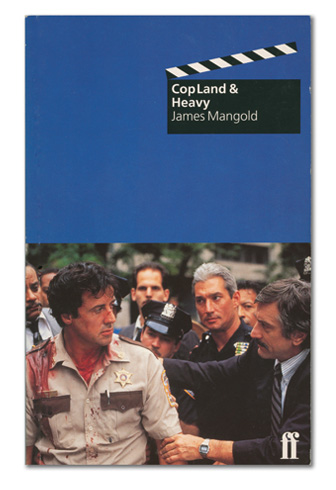
Originally published in Cop Land & Heavy (London: Faber & Faber, 1997), pp. ix–xxxviii
![Following Your Gut: Writing and Directing <em>Heavy</em> and <em>Cop Land</em> [Interview with James Mangold]](/storage/media/)
Tod Lippy: You studied filmmaking at CalArts?
James Mangold: Yeah, I made a bunch of films there—one short every year. One of the years I was there I spent in the acting program, which was really one of the great parts of my time at CalArts. Sandy Mackendrick was my main teacher; he was one of the few teachers in the film department who was also an experienced, classically narrative filmmaker. I was Sandy’s T.A. for two years and kind of his protégé. He died last year. He was a great man and a remarkable and rare kind of teacher. It isn’t often—as a student—that you are exposed to an amazingly talented director who can afford, emotionally or financially, to give more than just his time to you. Sandy’s career had been cut short by ill health and by the fact that he was so demanding. But instead of feeling sorry for himself, he just devoted himself to being a truly great teacher. He had this tremendous reserve of energy.
The greatest lesson I learned from him was how hard you had to work to make a good film. I would bring in some lame five-page film script, and he would generate seven pages of handwritten text about what I had written. He was also an illustrator; he’d even do sketches of scenes in your film. It was this level of indulgence that made you realize that you were a complete fraud unless you could somehow match his level of application and passion toward your projects with some of your own.
One of the films you made at CalArts got you a lot of attention in Hollywood.
It was the last one I made—I’d have to admit to being completely conscious of trying to make a film that would get me hired in the industry. My last year there I was reading about Amazing Stories, the TV series that Spielberg was putting together. So I just devised this short film that I was sure was going to get me hired by Spielberg. It was completely calculated to be kind of Twilight Zone-y, with lots of fog, starring a little child; it was a clever film.
And, as wishes often do come true, it got a lot of attention and ended up getting me in a bidding war between Barry Diller and Michael Eisner, between Fox and Disney, and I was represented by Jeff Berg, chairman of ICM. I mean, I was twenty-one at the time, and I ended up with a writing/directing deal at Disney! But I got caught up in an incredibly complex political environment. My only real advocate at the studio was Eisner, who was so high up that you never saw him—he was opening theme parks around the world. The first thing I did was look through this book of their TV movies that were in development for the next year. The one I was drawn to was called “Deer Story.” It said, “A fawn lost in Manhattan teams up with some kids.” I was like, “Oh, this is what I’m gonna do.” And then I set about basically trying to write The Red Balloon in Manhattan, with a deer instead of a balloon. The structure was built on the standard template of the Disney animal movie: kid finds raccoon; builds raccoon a pen; gives raccoon a name; loves raccoon but then realizes raccoon needs to go back to nature, so it’s goodbye, raccoon. Raccoon saves him once from a cougar and then goes away. In this case, it was all those things except I added an urban twist to it in that it took place in the city with these kids from the projects who had no idea how to return this fragile creature—a fawn, who, for them, might as well be from Mars—back to the woods. I thought it was actually a pretty beautiful script, but the problem was that it just wasn’t Disney. Actually, it was very Disney. But it was not Michael Eisner/Jeff Katzenberg Disney. It was not very talky, it wasn’t particularly funny—it was extremely earnest and kind of lyrical and silent. I was trying very hard to do something un-TV.
Unfortunately, the studio detested what I was doing. They thought it was dark and maudlin, and too ethnic and too urban. I got fired after two days of being director. They then asked me to rewrite it and make it more suburban—all this with the promise that I’d get another thing to direct. I was twenty-one and completely confused, so that’s what I did. But I never got another chance. Once you become “damaged,” in the Hollywood context, you are truly damaged. “Whatever happened to that kid with the big deal at Disney?” I was young enough to heed some very bad advice given to me by my agency: keep my firing from the TV movie a secret. So as other studios were talking to me after this incident, I didn’t tell them what had happened. Whenever you try to keep a secret like that, you’re screwed: there’s an incredible hole in your story that’s causing everyone to wonder whether you have a drug problem or what exactly happened to you over at Disney. The better thing to do is to say, “Ah, they fucked me over—goddamn assholes, they got no imagination.”
Ultimately, I think that everyone did me a big favor. “Coming up through the system” is a completely false model. The dream I think everyone is being sold is this kind of Spielbergian ascent from a small cubbyhole office into big directing jobs. Essentially, he is really the only great director who had that kind of experience. If you think about it, most of the directors you admire made movies on their own first. You simply can’t walk into this incredibly intense environment with so little political capital or momentum and make something great. If you are so beholden to the people who are giving you your start, then you really have to just do what they say and follow their orders and hope to God you make a terrific film. When you’re twenty-one, lifted out of film school and given an office and an assistant, you assume that what they want is your freshness and your idealism. Yeah, well, sure they do. As long as it doesn’t get in their way.
On the other hand, I’m not someone who came up fantasizing about working completely outside the system. I have a fascination with trying to get something great done within the system, but I think you need to have a tremendous amount of knowledge about how that organism works. I got some of that in my first pass through Hollywood—by making a lot of mistakes.
So that was all you worked on during your tenure at Disney?
No, I wrote Oliver and Company, an animated feature musical they threw me on to work off my deal. This was pre-Roger Rabbit, pre any big successful animated movies. Regardless of the revisionist histories that have since been written about Jeffrey and Michael’s reign at Disney, at that point, animation was not considered the centerpiece of the new Disney’s strategy, which is why a nobody like me was given the task of writing their regime’s first animated feature. In any other situation, they would have hired some renowned screenwriter. Oliver and Company came out three years later. It wasn’t embarrassing—and it actually made a decent amount of money. But that was long after I had left the studio. After my deal was finished, I found myself back on the streets, really doubting why I was doing this. I toyed with the idea of becoming a novelist, going back to school, studying writing and just kind of dropping the whole film thing.
Then I had a conversation with the guy who ran the writing school at UC Irvine, who assured me that the writing world sucked, too. He said it was incredibly political and rife with corruption and agents and “buzz” and “heat” and hypocrisy—I wasn’t going to find any solace there. So I ended up going back to film school. I moved to New York and enrolled at Columbia, which was kind of a goofy thing to do, in the sense that I’d already written a successfully produced studio feature and a TV movie. I don’t think anyone at Columbia really believed that all of this stuff had happened to me: “He was under contract at Disney and then ended up back at film school?” I was the physical incarnation of every film student’s ultimate nightmare.
At Columbia, I decided to make a film that was the opposite of that last film I’d made at CalArts—the one calculated to get me a job. Now, I was going to make a movie that was as inaccessible to studio executives as it possibly could be. Actually, I wasn’t even thinking about them; I wanted to make a movie like the Super 8 ones I made when I was thirteen or fourteen when I would just think of these perverse challenges for myself and then try to meet them. In this case, it was to tell a story that was completely wordless. Not a spoof, or an homage or a nostalgic comedic silent film, but a contemporary and adult story—silent.
And this was your film Victor?
Yeah. I figured a lot out for myself with that film. I figured out what my problem had been at Disney; I figured out what was driving me artistically. Writing and directing Victor made me incredibly aware of why I was dissatisfied with certain kinds of movies, particularly American films. Most movies we recognize as being extremely “visual” are actually standard dialogue films with a couple of homages to great cinema in a couple of key sequences—these unique cinematic moments which are dolloped on like sour cream. But if you want your whole movie to be some kind of unique cinematic moment, then you’ve got to somehow embed that within writing. It is not the job of the director to make a film visual, it is the job of the writer, because it is the writer who will decide whether the thing is decorated with images or built with images.
As I was making Victor, this thirty-minute silent film, people kept saying, “Why don’t you just roll some sound while you’re shooting, just in case you change your mind.” I was surprised that, even within a film-school setting, you hear those kinds of “studio executive” voices. When someone asked me, “What are you going to hear when this movie plays?” I’d say, “People coughing.” I actually ended up marrying music and ambient effects to the film, but it’s almost like I had to stake that severe position—total silence—just to end up where I did.
Did you write a screenplay for that or just use storyboards?
I wrote a screenplay for it, and then I storyboarded it. The screenplay was eleven pages long; the movie was twenty-eight minutes long. The page-a-minute thing just doesn’t work dependably with image-built films. At least it doesn’t for me. That rule of thumb is based on the thirties to forties post-arrival-of-sound screenplay model—that a page, most of it being dialogue, will generally run about a minute.
You’ve written an article on what you feel about that and other discrepancies between screenplay and film. It seems that your basic thesis is that the classic screenplay format gets in the way of the content of a film; that the rules that must be followed while writing a screenplay will actually modify the content of the film.
If you work with graphics and page-layout software, there are these “intelligent” tools called “snap-to grids.” As you’re laying down objects in a layout, the software forces the objects to sit on the “one inch line,” or the “two inch line,” etc. It forces things to stay lined up. It’s sort of the same, in a subtle way, with screenplay format. The format has an “intelligence” of its own, it has grids it wants you to cooperate with. For instance, it just reads better ending a scene with someone saying “fuck you” or “I love you” than it does with a line of action description like “Jack looks about the room, tears in his eyes.” For some reason, snappy dialogue as scene punctuation is often a stronger “feeling” choice when you’re writing, but not necessarily when you’re filming.
I don’t mean to suggest that the screenplay format should be abandoned, it’s just that you should be aware of how all the “snap-to grids” within the format are pulling on your words. These paranoias of mine come, I think, from my being first and foremost—since I was a kid—a filmmaker. I never considered myself a writer, so I always looked at that process with great suspicion. As a director, as a filmmaker, you’re continually made aware of how drastically the choices you are making—your crew, actors, rehearsal, location, lens—will affect the final film. In the writing process, you can fool yourself and think you’re alone, but you’re not. The “grids” you’re working with and against—readability, page count, the layout’s natural predilection for dialogue, etc.—are so universal; they are the voices of unseen collaborators, and if you listen to them all the time, the writing process itself becomes formulaic. For Christ’s sake, every one doesn’t have to write a movie the same way! I mean, it would be like everyone rehearsing their movies the same way, with all actors—like robots—using the exact same method.
So many writers throw up their hands and deliver the same basic script over and over again. Of course, someone like Paul Schrader is working one way, Robert Towne is working another way, Gus Van Sant another way—many screenwriters do rebel against these standards. A lot of the people making interesting movies are—not coincidentally—pushing and pulling at the format of the screenplay as much as they can.
You seem to have your own ways of rebelling against it in the screenplay for Heavy. First of all, in your directions you introduce a character by name only after that character has been identified in the film. For instance, in the film, we don’t know who the two women conversing are until we see Dolly’s name tag, and get a full close-up of Callie’s face. Instead of introducing her name on the first page, you simply call her a YOUNG WOMAN until that point in the script. It approximates the phenomenological experience of the film.
Toward the end of my time at Columbia, I was teaching undergraduate writing and directing, and I was always telling my students to write as if they were describing a movie to a blind person. Yet you’ve got to be brief, keep things moving along. You can’t take twenty pages to describe every nuance of Liv Tyler’s [Callie’s] face, you need to move on. Essentially, if you don’t know a character’s name, don’t offer it to the reader until they learn it in the course of watching the film. This method of writing is a kind of protection, because you don’t fool yourself. If you introduce a character with a lot of detail—“Into the room walks Hank, a thirtyish stockbroker, with a hero’s smile and a predilection for loose women and fast cars”—you’re fooling yourself and all the people you’re working with, suggesting you’re going to get all of that information into that moment.
What about using sound effects so prominently?
That I got from a wonderful writing teacher at CalArts named Gill Dennis. He had us watch five minutes of an existing film and then write the screenplay for the scene we’d just watched; you know, going backwards. What I remember is this powerful scene from Joseph Losey and Harold Pinter’s The Servant, with Wendy Craig and James Fox. Wendy Craig is seducing James Fox on a butcher-block kitchen table at night, with water dripping from the faucet. The water dripping plays such an incredibly significant rhythmic role in accentuating the tension, counting off the seconds. Transcribing that scene, I realized how much certain sound effects—even things like clocks ticking—have to do with punctuating a movie, and they should, if possible, be noted in the script.
Victor seemed basically like a sketch, or study, for Heavy. The lead character is an overweight, shy photo clerk who falls in love with a young college student, is rebuffed, and then, at the end of the film, seems about to enter into a relationship with a store clerk.
When you made Victor, did you know you would eventually be doing a feature film with essentially the same lead character in a very similar situation?
In fact, it was a very interesting genesis, because I had accumulated so much ambition about this character Victor. I had him working days in a photo shop and nights in his mother’s restaurant—I had all this stuff going on. I almost couldn’t solve the screenplay because I had too many ideas. There was an “A” story—at the tavern—and a “B” story—at a photo shop. When I made Victor, I just lifted the “B” plot from Heavy. Then when I turned back to Heavy, I thought, “Well, now I’ll skip the ‘B’ plot since I did it already,” and suddenly the “A” plot made more sense. Your head can be filled with so many ideas that you can drown your film. Sometimes you can break it in two—like an earthworm—and let the two halves live separately.
Victor wasn’t a “study” for Heavy because I never really had that much confidence that I was going to get a million dollars to make Heavy. Making Victor, I was just trying to experiment—to reawaken myself to what I liked about making movies. And I was truly astounded at the quality of the experiment, because I really thought it was going to be much more of an indulgent learning experience than a film.
When did you start writing Heavy?
The central ideas came out of my post-Disney depression. I had gained fifteen or sixteen pounds, I was living at home, making elaborate breakfasts every morning and avoiding writing, and I was thinking about the place I grew up, which had this tavern where a very heavy guy worked—it was his mother’s place. I started assembling all these ideas and added the idea of invisibility because, personally, I’d been so high-profile, and then I just disappeared. The contradiction between being bigger than other people and at the same time being unseen were just spinning off of this—tons of ideas—but I had no idea how to shape them. Then I came to Columbia and I made Victor. In my second year there, Milos Forman selected me for this group of five people he was going to work with. We all arrived the first day without any movies to shoot—it was a directing class, but I arrived without a script! So I started writing ten or twenty pages every week. By the end of the semester, I had a feature screenplay. Milos’s brilliant gift to me, because in his early work he had been doing these incredibly intimate observational movies, was that he understood what I wanted to do—in a way that no other teacher or advisor ever had. One day, he said to me, “This movie is about what occurs on page X.” And I quickly fumbled to page X, and it was the scene in which Victor says, “She’s fine,” after someone asks how his mother—who has just died—is doing. Milos said, “There’s your event. Stop worrying you’ve got a plotless movie and just expand on that.” As I was first writing on the movie, I had Victor lying about her death for, like, two days. But when he pointed to that lie as the big event, I realized I should explore why someone wouldn’t tell anyone that his mother had died, and how long he might sustain it. Because the longer it goes, the more dramatic it is.
Anyway, I’d never had a teacher who would isolate these kind of life moments as key plot points; others were more worried about the fact that the “plot,” in a conventional “bomb under the table” sense, wasn’t going anywhere.
I’m much more about trying to collect these organic life moments and trying to figure everything out, which is, admittedly, a much sloppier way of going about writing a movie. Given that I come from a family of painters, it’s the only way I can work, as opposed to creating this incredibly severe architecture and then trying to breathe life into it. I’d much rather take life and try to shift it around and figure out an order.
That was your first draft?
Yeah, I worked on it a lot after that. I continued working with Milos after that semester, sending him stuff. The basic idea—this kind of beauty-and-beast relationship with this incredible connection between the two of them, yet with an overriding sense of impossibility about any kind of real love happening—was there. The other central idea that also got crystallized at that point was that this was going to be a movie about a person who moves an inch. This is a fascination of mine, the idea of making a movie in which a small distance is traveled but it feels big. Most movies are about someone moving from a position of possibility to a position of triumph or tragedy. In this case, I was making a movie about someone moving from no possibility to possibility. That was the triumph. A character with absolutely no choices moves to a place where he has a few.
So those central ideas were there. I’d say that three-quarters of the movie as it exists now was written in that context with Milos. It was very freeing for me: I’d write long sequences of talk-radio dialogue or the “Turtle crossing the road” scene and he’d say, “Well, I don’t know if this will work or not. Shoot it and cut it if it doesn’t.” He knew that I was going to direct it, so there was this inherent sense of playfulness in it all.
Was the script finished by the time you finished school?
Heavy—the film itself—was actually my thesis. I could have made Victor my thesis, or the screenplay to Heavy, but I didn’t because I really wanted to stay a part of the film community at Columbia. So even though I’d completed my credits, I went off and shot Heavy without having formally graduated.
Heavy solidified in the year or so after that class with Milos. That’s when I teamed up with Richard Miller, who produced it. It never changed too much, although I was always messing with it. It’s a lesson in how the first burst of energy needs to be respected. I tend to think that you can really mitigate something into the ground, worrying too much. You can gain tremendous amounts from reworking a script over and over, but essentially you are blunting what you originally did. Over and over I find that you end up going right back to where you started, taking some of the fruits of your reworking and plugging them back into the original draft. No matter how much logistical thinking you do later about ways a script could be better, there’s primal energy in a first draft. You really need to respect it.
Once you had the script together, when did you go about getting the film financed and made?
The fall/winter of ’93. I wanted to shoot in 35 millimeter. And I wanted a seven-week schedule, which is rather long for an independent film. But I knew that this kind of silent wordless thing is extremely time-consuming—it requires more set-ups. You can’t knock out a page in a two-shot. Also, I’m not a big fan of rehearsing outside the spaces in which the movie will actually take place. Given that we weren’t able to trundle all of the actors to upstate New York and put them in the tavern to rehearse, I wanted time to do it in the moment, because when you’re making a movie that’s all about gestures and props imbued with so much meaning, it becomes a false rehearsal to bring actors into an empty room with masking tape on the floor and ask them to play the scene. It also puts me at a disadvantage, because so much of the architecture of the space—the food slot, the bar, the kitchen implements, for instance—is going to affect the staging. To pretend those things don’t matter is to acknowledge the way a lot of modern movies are made: you just pop a 50-millimeter lens on and pan and tilt and dolly wherever the actors move as they chatter away.
Was this the actual tavern from your hometown you were referring to earlier?
No, that one wouldn’t have worked. It had changed since the old days. Pete and Dolly’s Tavern was tough to find—the script made so many specific demands on it. It had to physically conform to the script, because we didn’t have the money to be knocking down walls. When we finally found that tavern, the one in the film, I could just see these scenes getting played out in it—with only a few small modifications. The house where Victor and his mom lived didn’t so much have to look a certain way—I didn’t care whether it was an old house or a fifties house—but I was concerned with where the doors were, where the hallway was, where the kitchen would be, the way these spaces played. I finally decided on this house that had a cupboard that opened on both sides—it was like the food slot in the tavern. To me, the movie was endlessly about looking through something at something.
That’s very clear in your camera directions.
I have a personal little mantra I’m always repeating to myself: variety is not the spice of life. There is a beauty to ritual. When you’re making a movie about someone who moves a small distance, who doesn’t talk much about how he’s feeling, one of the ways to extrapolate what’s going on with him is to watch him doing the same thing many times over. Of course, each time he’s doing it, he’s doing it differently, because he’s changing.
Anyway, it’s the same with limiting the number of locations. Often, plays are written and imbued with a real claustrophobia—it is all jammed into this one room—and that’s great for a movie, too. If you make an Uncle Vanya where suddenly everyone’s wandering all over the fucking place, you’ve destroyed part of its power. In Heavy, Dolly sits in this armchair in the kitchen and then—later—she’s dead. Then, Callie is sitting in the same chair, weeping, and then—later yet—Leo comes in and sits there and eats cheese. Because that chair is so leaned upon throughout the movie, it gains a certain power that wouldn’t exist if you were always trying to keep things moving to different places for variety’s sake. These little micro-discoveries and micro-struggles with spaces, doorways or chairs are really very fruitful. I learned this from the films of Ozu, who really wasn’t afraid to keep playing with permutations of the same space. He’d take you through elaborate transitions from one space to another, but wouldn’t necessarily try to break the movie out into new spaces all the time.
The traces the characters leave on spaces, as well as objects, play a significant role. For instance, the toothmarks on Dolly’s toast, or the shots of a door swinging in a frame after someone has walked through it. Then there are the scenes of them driving to the overlook near the airport, where, instead of viewing a car driving into the frame and parking, you simply see car lights briefly hitting a “No trespassing” sign.
Sometimes those short cuts seem simply like short cuts—laziness—if you don’t reinvest in them, ritualize them. But there is a level where, if you confidently repeat the same gestures, the same cinematic contractions, people begin to understand that there’s some system of logic at work in the film. Besides, you can’t, in movies, always have people arriving and leaving; you need to find ways in and out faster.
Can you talk about the fantasy sequences—Victor’s rescue of Callie and the subsequent appearances of “Wet Callie”? You never really indicate that what we’re watching is any different from the rest of the film’s action.
I’d argue with that; the music indicates it. But, you’re right, it’s not telegraphed. It’s not clear that this isn’t really happening. Which essentially was my little game with the Psycho iconography: Who killed her? Jeff? Victor? I really enjoy that cheat. I think there’s an interesting emotional flow in the movie. In that scene, where he sees her lying in the water, it’s the first time the movie is clearly Victor’s. It’s an ensemble movie up until that point. Then, finally, you’re in Victor’s head. I really didn’t want to just say on a literary level: “This is what Victor’s thinking right now.” I wanted to invest in the beauty of the fantasy, which is all the better if you believe it. If you’re like, “Wow, this is kind of sexy, the way he’s pulling her back to life.” And then suddenly having to deal with the fact that it didn’t happen.
Regarding music; you obviously take a great interest in underscoring the moods of your films with their soundtracks. In Victor, you used some pieces by Erik Satie to create an elegiac tone, and Thurston Moore’s soundtrack for Heavy has a similar effect.
One of the things I was most concerned about was that Heavy would end up being perceived as a sort of a Rust Belt ensemble film—a Last Picture Show remake. Yet it had all these dreamy lyrical elements to it: fantasies, the guy in the hospital, the invisibility issues. I didn’t want a country-western, upstate–New York soundtrack. Thurston’s score did everything that I was hoping it would. It staked a much more modernist ground for the movie and, at the same time, kind of sutured a lot of thematic ideas together.
How did you come up with the premise for Cop Land?
I had been thinking about making a movie like this for some time. I grew up in a town in the Hudson Valley of New York where a lot of cops and firemen from New York City had bought one-acre plots. It was during the seventies, when there was this “white flight” from the city. Many of the friends I went to school with were children of civil servants in New York City, so I was exposed to a lot of this anger about the Brooklyn and Queens neighborhoods that had changed—gone ethnic—and the city that had betrayed them—gone liberal—and how these changes had caused them to set out and make a new home for themselves and their families. I remember going on a field trip to see The Nutcracker in New York City, and was amazed to find that many of the kids I went to school with had never been to Manhattan. They lived an hour and a half away from the biggest city in the world, their parents worked there, and yet these kids had no exposure to the city other than to know to fear it. Everyone shopped in Paramus.
As I would tell people about this odd population of my home town, it always occurred to me that there were certain parallels with the issues of the frontier and the Old West. A new land, a fresh start for some gun-toting men and their families, a sense of community being with others of like minds and similar anger—and a uniting fear of what they had escaped catching up with them. I asked myself who would be the most interesting character to follow in a town full of cops, and the answer I came up with—already feeling the Western vibe of the setting—was the local sheriff.
Also, around the time I started writing this, the news was filled with stories about the Rodney King incident in L.A. and the Mollen Commission Hearings on police corruption in New York City. And there was a consistent theme that ran through many of these stories: often these cops-gone-bad were commuters—“Hessians,” as they’re called by other cops in New York City—who found themselves risking their lives protecting a place they had no personal stake in.
In some ways, this was quite a departure for you from Heavy.
After writing Heavy, I wanted to write a movie that wasn’t so ephemeral, if that’s the right word, something that drove me and the story a little harder. Yet what I was uninspired by were the formulas of current action films. I found myself continually attracted in the thought process to Westerns, because to me they somehow have this very formal quality, and a lot of character—certainly a lot more than modern action films. When people think back about certain Westerns, they often remember them being more high-octane than they actually were. They were generally these amazing character pieces about a man caught in a real moral crisis—where, in a sense, law, righteousness, right or wrong, were all up to him to define. And of course there were other really beautiful big themes, like redemption, or revenge, or religious freedom. The films that rang over and over in my head when I was writing this were Shane and 3:10 to Yuma.
High Noon has been mentioned in several reviews of the film.
Everyone talks about that film. High Noon was much less important to me in making the movie than the two I mentioned.
What about Bad Day at Black Rock? That film also features an emasculated sheriff who’s been bullied into submission by the bad eggs who run the town.
After I’d written Cop Land, people suggested I look at it. I hadn’t before I wrote it, though. To me, High Noon and Bad Day at Black Rock are great films, but they didn’t pack the emotional wallop I wanted. Ultimately, though, I think that Cop Land has turned out to be more like those films than Shane or 3:10 to Yuma. Part of what I came to understand while making the movie was that when you have a piece with so many characters, you can’t be centered in enough on one person to effect the kind of single character emotionality you find in those films. In Heavy, there are lots of supporting characters, but they’re all pretty marginalized. It’s a fine difference in Cop Land, but with the addition of all of these plot elements, there are things you have to explain—the interstices of the modern world, how law enforcement works, people plotting against one another—which take your attention away from Sylvester Stallone’s character.
Actually, what’s interesting to me is that almost every major event on a plot level in the movie is discreet from the separate character story of this guy living on the outskirts. I mean, if you didn’t have Freddy in the film, you’d pretty much have a cop movie. Freddy is the Western. I don’t know, maybe I can’t put my finger on it that cleanly; I’m still processing it, just like I processed Heavy after it came out.
We’ll talk more about this later, but since you brought up Heavy, do you find that you went through a similar process, from first draft to finished film, with Cop Land?
The kinds of changes that occurred between the screenplay and the finished film were pretty much the same with both Heavy and Cop Land. As a writer/director, I don’t really feel the evolution of the film is a succeeding or failing of the screenplay. The screenplay is a draft of the movie, the shoot is a rewrite, and the cutting is the final draft. Not to be New Agey about it, but it’s interesting to take this journey of discovery and see what lives and what doesn’t through this process.
In both movies I excised a further internal investigation into the private life of the protagonist. At some point the story engine took over and was not going to let me indulge in, for instance, Freddy’s world of music or Victor’s drink-mixing or cookery. These private activities on some level took away from the obvious story goals. In Heavy, the guy’s lonely, and he desperately wants to make a connection with someone other than his mother. But by suddenly focusing on his cooking too much in the middle of the movie—as I did in the script—his relation to Liv Tyler’s character was being minimized emotionally. In Cop Land, if Freddy’s attachment to classical music had more to do with the central plotlines of the movie, which are so strong, then it somehow would’ve lived. But it really became a frustrating denial on Freddy’s part regarding everything that was going on around him. Actually, that Glenn Gould stuff was added on much later. I don’t know if this is true for other writers, but when you sit with the screenplay for a while, you can start over-tweaking, throwing extra stuff in. A good friend of mine is a Glenn Gould fanatic, and I got inspired one day to shovel that world into the screenplay. But when you live with the movie, you realize Freddy’s preoccupation had to be that he dreams about being a cop, not a classical music aficionado.
When did you write the first draft?
I wrote it in 1993, and Miramax bought it that same year.
It sounds like your focusing on character habits is a tool you use to get to the fundamentals of plot.
The truth is, I resist plot, and my inspiration for a script tends to be a collection of character beats and interactions between spaces and people—I tend to back into the plot. Once I dramatize these scenes—put them up on their feet—I begin to realize the kind of tangent I’ve gone off on. I just don’t like it when I see the script making too much of a beeline. I get really scared, so I start throwing these kinds of wrenches in the script. Some are true, but some aren’t. It’s the difference between a novel and a screenplay. Internal moments in film are very tricky. All these dangers are increased when you have characters like the ones I write, who hesitate to take standard screenplay action. It’s one thing for them to hesitate; but it’s something else to have them further embed themselves in activity that’s peripheral.
If you look at Taxi Driver, at some point Travis Bickle goes into this intensely private period, where he starts playing with guns, writing diaries, following newspapers—but all of that is in line toward action. Every one of these little private explorations is a preparation for action, not an avoidance of it. Like the gathering of a storm.
Why did you decide to set Cop Land in New Jersey?
Well, I wanted to put the movie in New Jersey so I could see the city across the river, because I was thinking about the importance of geography in the Western—that kind of big town/little town thing, looking for smoke signals over the mountain, knowing every path between the two settlements. I was talking to Lester Cohen, the production designer, and I told him that if this were a book, the endpapers would feature a map of the world it depicts: The Town on one side, The City on the other and The Bridge spanning the two. That’s almost all you need. The men in this town commute across that bridge every day into this city they hate, wondering if they’ll make it home alive to this new frontier, this suburbia, they’ve established. To see that compression of geography—have it just be “there” all the time—was really important. But I’ve always been a fan of compressed geography, and not only in Westerns. I mean, think of Rear Window, or almost any of Hitchcock’s other films, except for North by Northwest.
I noticed a disclaimer at the end of the film stating that it’s actually illegal for New York City policemen to live outside of New York State.
Well, I never felt like I was making a Sidney Lumet movie. For one thing, I didn’t want to jump into that sandbox and have to compete. And besides, I didn’t want the movie to be an absolutely realistic depiction of modern law enforcement: I barreled through the constraints of what actually could and could not happen pretty quickly as I wrote this.
You obviously did some pretty extensive research, though.
I did a lot of research, but I think you can know too much. For me, it’s such a troubling thing when, for instance, you know something is best for the story if it goes a certain way, but then you find out it’s not possible because they just passed a law last year making it illegal. That disclaimer was put at the end of the movie in anticipation of the media’s usual reaction to a film that happens to be about real-life issues. It’s going to be perceived, no matter what I say, as an “issue film,” and suddenly any breaches with reality are going to be attacked.
I think I was making this movie for people who don’t live in New York, because I knew there was a level to it which people who actually live here would have all kinds of problems with. It’s different with the Western. None of us ever lived there, so the film-maker has this tremendous freedom, even more so than doing a science-fiction movie, because in sci-fl you have to justify every bit of technology. But you seldom question the way things are depicted in the Western, even though there are often gigantic holes: “Oh my God, there wasn’t a gold-rush that year after all,” or “Wait—the Indians weren’t hostile at all in that area.” I mean, nobody sat George Stevens down and told him he’d gotten it wrong.
So one of the sad facts of modern film is that, unless you put something in outer space, you’re setting yourself up for all kinds of problems. This slavishness to current fact causes anyone with an imagination to run into a land of complete make-believe—and it inhibits storytelling.
Have you ever noticed how people always exaggerate when they’re recounting something that happened to them? Like the classic case of the guy describing the size of the fish he caught? Well, there’s a reason people make the fish bigger—why they heighten the drama when they’re telling a story about something they experienced. It’s because they want to impart upon the listener the feeling they had, the sense of wonder or excitement they felt when they lived through it. And when a storyteller makes everything accurate, it’s boring. I remember when Jaws came out, there was all this discussion about the fact that great white sharks had never been found near Martha’s Vineyard, or that they couldn’t grow to be as big as the one in the movie. Give me a break! It’s so stupid. I think it comes from the fact that drama—what makes it work, the ways in which we’re drawn to it—is so undiscussed, that generally, people’s approach to criticizing drama is as if they’re criticizing an article in Newsweek.
How did you come up with the whole “diagonal rule” metaphor Figs expounds upon throughout the film? Was that police department lingo you came across while doing research?
No, I didn’t do my research until after I’d written two passes on the screenplay. That to me was a lesson in how you can get to truth through total bullshit. It came from the way I always walked around Manhattan. When I was standing on a corner, with one sign saying “Walk” and the other saying “Don’t Walk,” I would always go wherever it said “Walk,” just to keep moving. You enter into a rhythm, where you don’t want to stop in one of those sweaty packs of people on the curb. So I thought of this as my own little “diagonal rule” of walking around Manhattan, and I wrote it into the first draft as dialogue for Figs. But later on, after Mike McAlary and some other cops read the script, they all commented on the diagonal rule idea as being so true to how cops talk and think.
How did you come up with the character of Figs?
Well, for all my love of wordless—or at least less articulate—characters, I myself have a very big mouth and can go on big rants when I feel like it, so I wanted to find that part of myself in somebody in this movie. Also, in some ways he’s the other half of Freddy: they’re the same guy, enmeshed in ambiguity. Figs is just more active about it, scheming, going behind people’s backs, that kind of thing. And he’s always constructing theories in an attempt to rationalize his way out of everything.
Can you talk about the similarities between Victor, the protagonist in Heavy, and Freddy Heflin? Both seem trapped in a certain stasis when we first meet them, and both, as you put it in the Heavy interview, end up “moving an inch,” although the repercussions of Freddy’s transformation are much greater.
No matter what anyone says about similarities between the two characters, Freddy is much further along than Victor was. When I look at Cop Land, I don’t imagine the lead character is a virgin, or someone who’s never dated a girl.
Well, he’s also had this moment of glory in his youth, when he rescued Liz from the submerged car.
But also, he has responsibility and functions, and he doesn’t have Shelley Winters yelling at him all the time. But there is the same kind of melancholy to his character. One thing that makes me mad is when people talk about my characters as “retarded” or “slow.” It’s the same thing when people ask me, “What’s the deal with fat in your movies?” Well, all I’m trying to do is actually put people in movies who seem like the people I see in the real world. But there’s this grid system in movies: everyone’s so beautiful. I mean, when Liv Tyler’s playing the dowdy sister in Inventing the Abbotts, you know there’s something crazy and skewed going on in terms of aesthetics of beauty and the way movies are cast. Liv was great in that movie, but that just proves my point. If one of the most beautiful women in the world can inhabit that kind of role, it shows the strange relationship between the audience and beauty on film. When you’re working with movie stars, it’s more important to close the gap between their glamour and the characters they play. Sly is not fat in Cop Land; he just went from having a Mr. Universe body to the body of a regular guy.
Also, we’re so used to characters who have a weapon for everything in their bat belt, or who have a retort for every smart remark. Those are all such well-worn rituals in movies now that suddenly when you don’t do that—when your character receives an insult and doesn’t come back with anything—some people might think of him as dumb. The fact is, when people hit me verbally, I usually just don’t know what to say, and I’m a pretty smart guy. Besides, whose actions in the movie are more stupid? Ray Donlan’s, Figs’s or Freddy’s? The person conducting himself with the most intelligence given the quandary he’s in is Freddy Heflin. What’s he going to do, ruin his life and arrest all of his friends because one guy he barely knows tells them they have Mob connections? And while almost everyone else in the film has such a clean agenda, like Tilden, for instance, Freddy has no big prize waiting for him if he does the right thing. I tried to explore that notion of how we all do things for such fucked-up reasons in the late part of the film. Freddy thinks, “Well, if I do this, maybe Liz will really like me.” And she makes it clear she doesn’t want to get involved with it. Even his deputies don’t support him.
I’ve noticed that there is a certain amount of expanded dialogue, as well as several entirely new scenes, for some of the characters in the script published here, compared with an earlier, slightly leaner draft from 1995 you sent me a while ago. Did that have something to do with securing the participation of people like De Niro and Keitel?
I’m trying to remember. Which scenes in particular?
For instance, there’s an entire scene added into this script (and the film) in which De Niro’s character, Moe Tilden, has a brief, tense confrontation with Harvey Keitel’s character, Ray Donlan, in the Garrison town deli.
Actually, I wrote a draft long before Bob was involved which opens with Moe Tilden in the bar with Freddy, where he lays out this central challenge to Freddy in the first ten pages. But that really destroyed the chance to set up the town first. But I think even that far back I saw the importance of having the Tilden character actually come to Garrison. I will say that, in part, understanding the power of the actor playing the part does suddenly free you to imagine that it doesn’t have to be a big dialogue-heavy scene, it can just be a scene where he grins and hands out his business card and leaves.
In that earlier draft, you also have Figs, in the scene where his house has caught fire, arriving home in time to burst into the house and carry Monica back out, as Freddy stands by watching, pretty much paralyzed, on the sidelines.
To tell you the truth, I had to cut back on that scene to get the budget down. What I loved about the original scene was Figs running into the fire while Freddy is facing the limits of his own bravery. I liked the idea of Freddy witnessing the “can-do-ness” of these New York City cops, and Figs, in particular, on his own turf.
There seems to be more exposition in this script, particularly regarding the interconnections between Ray Donlan, the town of Garrison and the Mob, than there was in earlier drafts.
Well, the draft that’s published here is the “everything in the kitchen sink” draft. This draft has scenes I wrote that I never folded into the shooting script. I wanted people to see where my mind was rambling. I don’t understand the usefulness of published screenplays when they’re tailored to reflect what appeared on-screen, so I thought with both Heavy and Cop Land I’d go in the opposite direction and show the reader everything I was thinking.
Can you talk about the evolution of the long interrogation scene in this draft, in which De Niro’s character is first introduced?
Until three weeks before we started shooting, I had always started that interrogation scene just as they were finishing up. Basically, Tilden shut down the discussion and said, “Let’s take a break,” and then he left and had another short conversation with Carson in a different office. What happened was, the week before production began, Bob and I got to hang out at Internal Affairs, and they staged a mock interrogation with a cop for us. It was fantastic, and it inspired the shit out of us.
So Bob and I went back and called in all the other actors who were in the interrogation scene. Based upon what I’d taped during the mock interrogation, I wrote, like, five pages of bantering, interrogating—this, to answer your earlier question, was definitely a function of falling in love with Bob De Niro and wanting to see more of him. Then we got together in a rehearsal and worked on the five pages, which I boiled down to the three in this script. It was really intense—Bob, Malik Yoba, Victor Williams, the guy who played the cop and Bruce Altman, the lawyer, were all great. The problem was, you just can’t stay anywhere for that long in a movie like this. If you saw that scene you’d say, “Wow! That’s great!” But when you drop it into the movie, it’s like, “Where the fuck is this movie going?! What is the point?”
Speaking of exposition, in this draft there’s also a moment in which Freddy, looking in the direction of the water tower, suddenly realizes that Superboy has been hiding there all along. In the film, he needs a little help from Rose Donlan, who tells him where her nephew is hiding when he goes to visit her. I liked the subtlety of the first solution.
I loved it, too. There is a war that goes on between the beautiful language of cinema and the realities of exposition. The way it was originally written would have made a really nice film moment, of him looking toward the water tower and then cutting to him climbing it. But you had to concretely understand how Freddy knew Babitch was in the tower. As Sandy Mackendrick often told me, “Sometimes you have to kill your babies.”
How many rewrites did you do on this script?
In terms of really major revisions of the movie, maybe three. And I’d do reworkings of specific scenes, or I’d take stabs at things—like sticking De Niro’s character in the bar—and then I’d bail.
How did Stallone become involved?
Essentially, Miramax was very torn between holding out and trying to find a really big star for the movie, which would justify making the movie at a higher budget level, or doing it with a real, real low budget—maybe $6 million—with a cast of actors you’d probably heard of, but who wouldn’t guarantee box office. I was busy rewriting at that point, but the early drafts were generating a lot of “buzz” in Hollywood, even though there were still obvious problems with the script: it had a great opening, and a great ending, but not much of a middle. The other thing with Miramax is, they’re not going to pay a major actor his normal rate, so when Harvey Weinstein believes that the cast could be really stellar, you’ve got to find people who love it enough to want to do it for less.
One day I got a call from Arnold Rifkin, who was Sly’s agent at the time. He said Sly had read Cop Land and really liked it, and had also responded strongly to Heavy. And I said, “You’ve gotta be kidding me. The guy doesn’t make movies like this. I mean, he’s a great actor—he was amazing in Rocky—but he’s only making these humungous action movies now. Not only that, if he were going to do it, he would have to lose the buff body and gain a lot of weight. And I’ve heard frightening stories about stars who are this big who take over movies—this would have to be my movie, and follow my direction, and the screenplay couldn’t change…” I hit Rifkin with this flurry of paranoia, and I was shocked when he said to me, “Tell him. I’ll put the two of you together.”
So Stallone flew to New York to see me. We met for dinner at the Four Seasons. I remember rounding the corner in the restaurant and seeing him sitting alone at a table, looking very sweet. I knew immediately he was going to be in the film. I sat down and told him all my reservations, and he countered each one of them, telling me how tired he was of making the same kind of movies. “I want to wake up and not be sure I can handle the work of the day.” He wanted to feel alive again. I got really attached to him that night, and it seemed clear to me from our conversation that he would really be on my side, and would actually function as a sort of 800-pound gorilla who would protect me.
I mean, beyond all that, it was an incredible opportunity for me to roll the dice and see if I could try to collaborate with this megastar and come out with something different.
What did you need Stallone to protect you from?
This was my first big movie, and someone as powerful as Sly aligning himself with my vision of the film merely meant that that vision would be further secured. It was less about him defending me against adversaries than it was about me sensing that this relationship was an alliance, and would be a source of power in getting the movie made the right way.
Did his commitment lead immediately to this cavalcade of big guns attaching themselves to the movie?
Well, one thing to keep in mind was the fact that if you have Sylvester Stallone playing a fallible, “weak” man in a film, you don’t want little-known character actors playing the people who are pressing against him and intimidating him. You want the playing field re-leveled, with actors with enough weight to make his vulnerability in the film seem justifiable.
Right after we did a press conference announcing Sly’s involvement, we all went upstairs and sat in this conference room, going through who might be good for the other roles in the movie. I remember in my own glib way saying, “Harvey, why don’t we send this to Bob De Niro; he’d make a great Tilden.” He said to me, “How long would it take him to play this role?” I was like, “Five days.” Of course, it ended up being two-and-a-half weeks. So Harvey started chasing him around with the script. I met him in L.A., and we got along. And then it started falling into place. Cathy Konrad [the producer] had the idea of casting Janeane Garofalo as Cindy, and I’d just seen her in The Truth about Cats and Dogs, which I thought was great. So we put in a call to her, and it turns out she was a big Heavy fan. Ray Liotta had been tracking the script, and loved it, and I thought he’d make the perfect Figs. At that point, the casting of the movie had become this sort of “happening.”
Although Harvey Keitel was on the top of our list to play Donlan, he had been committed to another movie, but then it fell apart. The first time I met him was on Bob’s rooftop in TriBeCa. Bob and I were talking about who might be right for this part, and he just got on the phone and said, “Harv, come up here, I’ve got somebody for you to meet.” So Harvey came up to the rooftop, without his shirt on, and he looked fabulous: “Hey, how you doin’?” It was the most amazing experience. There are moments when you pinch yourself: “I’m sitting on a rooftop with Bob De Niro and Harvey Keitel.”
You didn’t have any actors in mind when you were writing?
Van Heflin. That’s it. The hubris involved in imagining four years ago that actors of this caliber would be in my movie—I mean, I may have lots of confidence at times, but I don’t have that much confidence.
Wasn’t there a concern on your part about feeling a bit overawed by these actors?
It’s like painting with really good brushes or cooking with the best ingredients. Everyone came in feeling they had something to learn or gain. And Sly really wanted this collaborative process, which isn’t to say he was just putty in my hands—he’s a very smart guy, and had lots of great suggestions, as all of the actors did. Every one of them was so willing to give their best to this.
I’ll give you an example. You might have noticed that in this script, in the scene in which Freddy comes to visit Moe Tilden at the Internal Affairs office, Tilden isn’t eating a sandwich, as he is quite entertaining in the film. What happened was, we had been rehearsing the scene, and it was really flat. We all felt pretty awful. There are times during production when the results are just not great, regardless of who you’re working with. Those moments are utterly humanizing—you’re just stuck with each other and you’ve got to figure a way out together. Anyway, I asked the actors to stay through lunch so we could keep working on it, and the caterers brought up sandwiches. Since Stallone was the only one on his feet in the scene, he couldn’t eat his while he was rehearsing. So Bob was opening his sandwich, and I said, “Let’s run through it one more time. I just want to hear it again so I can figure out where we’re going wrong here.” In the middle of the scene, after Sly had finished this impassioned plea, Bob suddenly looked up, with mayonnaise all over him and says, “I need a napkin.” And I was like, “That’s it!” What a great signal that he’s completely shut this guy off. By the way, I’m sure Bob knew exactly what he was doing at that moment. Maybe not consciously, but in some powerful, intuitive part of his brain he was trying to find an effective way to physicalize the scene. I immediately ran and ordered twenty-five sandwiches for the afternoon.
That scene gets a lot of laughs, and I think part of the reason it’s such a big relief for the audience is that a character of tremendous authority finally calls Freddy on what we as an audience have become increasingly impatient about. When he says, “You blew it,” it’s almost like he’s saying, “You blew the movie. It’s an hour into it, and you’re supposed to be doing shit already.” Any time the audience is feeling something that is not at all acknowledged on the screen, a distance is set up between the audience and the film. And if at no point the film turns around and says, “Oh, that distance? I know about that distance, I know what you’re thinking. I’ve got this story under control,” you’re going to lose the audience. Anyway, to me, that’s a great example of how you can get in trouble and find your way out by keeping your eyes open. So you see, in working with actors of this caliber, the working day is just like it is with anybody else. There are moments where you get frightened, and others where you get elated. It was only later, in dailies, where l really had the opportunity to register the fact that I’d been working with these icons.
I noticed that, among all the actors, Keitel was the only one who was absolutely faithful to your dialogue, even down to the “um”s.
Harvey is very fastidious.
Having read through or heard about all the ideas you had while you were writing and shooting the film, I’m curious to know how you managed to boil it down to a 95-minute film in the editing room.
Cutting is an extremely painful process for me, because what moves me to get involved in movies is so much more about character and images than it is about plot. I still don’t think of myself as a screenwriter. I could not, I think, write for hire; I have a very messy process. Every frame in a movie informs the audience so much more than you realize. For instance, in our first preview, it was amazing to me how quickly audiences “got” Freddy as a character—without further scenes spelling it out for them. And then there was the pulling over of the Black kids in the Suzuki.
That’s a four- or five-page scene in this script.
That’s a big one. I loved that scene, because beyond all the drama, it was a scene that united the geography of the town. As the Suzuki drives through the streets, it goes past the cops playing softball, and Cindy and Bill in the sheriff’s office, and Freddy and Figs pumping gas, and one by one they jump into their cars and start following it. I remember Cathy Konrad saying to me during the writing, “You know, I’m not sure that scene has a function anymore.” And I would be like, “But it’s so cool! I bet it’ll be in the trailer!” I had the most childish reaction; I thought it was so important, but for all the most feeble reasons. At that point, you already know these guys are evil, and you’ve gotten the sense of racial division—it’s all much more subtle without it. Also, that scene sort of stopped the plot engine for a little while. Where was Babitch? What was going to happen to him? The editor, Craig McKay, kept saying in the cutting room, “Babitch is the storyline, and every time we leave him for more than one scene you are going to feel like the movie has stopped.”
The funny thing is, Miramax did put that scene in the trailer. It was perfect, because anybody who saw the TV ads or the trailers were walking into the film with this sense of exposition about what this town was without me having to fuck up the narrative by actually showing the scene.
Besides adding De Niro’s voice-overs at the beginning and end of the film, you also managed to take care of some exposition by relegating it to TV or radio broadcasts, which, as in Heavy, are spread throughout the film.
Some of those were actually in the script. Yeah, any way I could get it in. That information was there, basically, just to satisfy the questioning part of our nature. It’s like parsley on a steak. Some of it was critical to relate, and some of it was just to tell the audience that the filmmaker is aware that there are holes, or that there is stuff happening out there that isn’t worth the investment of an entire scene. Also, in order to present a silent beat of storytelling to today’s audience, I’ve found that you need to tickle their ears with music or information, or they might disengage. The second there’s silence, you can get in trouble with an audience reared on television.
There’s a moment like that in the film that seems to have been the result of a decision on the set, because it’s not alluded to here in the script: during Superboy’s funeral, there’s this incredibly elaborate network of glances—between Rose and Joey Randone (the adulterers) and Donlan and Liz (the cuckolds)—that reminded me of the scene in Nashville where Keith Carradine sings “I’m Easy” and Altman captures all the women his character has slept with eyeing him and each other. It was immensely satisfying, and very funny.
Yeah. That beat expanded on the set. It’s one of those moments inspired by my love of silent moments in film. If you noticed, the music track is very heavy there—you’ve got to use sound really aggressively when there’s no dialogue. I mean, if I hadn’t had the talk radio playing during certain scenes in Heavy, I think people would have started making calls on their cell phones. In this day and age, the level of stimulus people require is so incredible—you feel like you’ve got to literally massage their thighs while they’re watching the film.
Near the end of the script, after Freddy has collected Superboy from the water tower, he has a long confrontational scene with Ray Donlan at the Four Aces Tavern, where he enters and tells Ray, “I’ve found Superboy,” and then proceeds to inform him that he’s bringing him in to Internal Affairs the next morning. In the film, that scene is brought forward almost twenty pages—right after Superboy has appeared at his front door—and his line of dialogue is changed to “Superboy came to see me last night.”
I shifted that scene in the cutting room. Part of this has to do with who’s playing Freddy. Because Sly has played so many heroes who are great at anticipating the moves of their adversaries, the perception of Freddy being “dim” was accelerated at certain points, and this was one of them. When we screened the first cut of this, there was a giant reaction to that scene near the end. “Why the hell is he volunteering the fact that he’s got Babitch to a proven killer?” The audience was frustrated he would do that, and sabotage himself. There was another problem, though: I was sensing that, structurally, I had kept Freddy in his cocoon for too long. And it turned out that both things could be solved by moving the scene forward.
However, I lost some of my Western motif by changing it around. When we shot that scene, I had him walking down the center of the street—with a big crane shot—and entering the tavern. The idea there, which I cherish, was to feature a character who will walk into his own death, and say what he feels, maybe even hoping it puts a stop to everything. But however I intellectualize it, it just didn’t work that way.
Quite honestly, it’s so easy to jump over these things as I’m answering you and make myself sound like a smarter writer, but let me tell you what I overlooked. I’ll use 3:10 to Yuma as an example: Van Heflin has to get Glenn Ford to a train which leaves at 3:10. But it’s only two o’clock, so he has to sit for over an hour with Glenn Ford while all of the bad guys figure out how to try and stop him. The problem in my film is, all those limitations of the Western genre don’t exist in the modern world. There are telephones, there are cars, there are bridges, there are tunnels. If you don’t call Moe Tilden, why not call the FBI, or the State Police? It was so frustrating to me. I was this dog with my teeth clamped shut on this bone of an idea that I was making a Western. At every juncture, I was fighting the logic of the modern world, and it was a real battle. If it had been physically impossible for Freddy to get Babitch across the river before 6:00 a.m., the scene would have worked. I racked my brain trying to come up with something.
The ending of the film is quite different from the one in this script. Several things have been added on. For example, the very last scene of Freddy by the river in Garrison, looking over at Manhattan. Personally, I really liked the ending to the 1995 draft I read, which closes with a crane shot of the car with Freddy, Figs and Babitch moving across the George Washington Bridge.
Actually, in the first draft from 1993 there is a car chase into Manhattan, all the way to Internal Affairs, and then there’s a series of wrap-up scenes in the town with Liz, with Cindy and with Freddy sporting a new hearing aid. Anyway, the coda scene in the film I just improvised. I felt like the movie lays itself out as the story of this one character kind of growing up and, frankly, the ending of Freddy going into the Internal Affairs building would be the equivalent of ending Heavy with Victor crying and Liv Tyler driving away. I tried to construct the most economical, un-spoonfed kind of thing, which to me was very much a Western thing.
I think the coda worked. My bigger problem was with the voiceover montage of news reports immediately preceding it, during which many loose ends are tied up. We hear that the Mob has been indicted, and Freddy has gotten his hearing back, etc. It was a little too much closure for my taste, and it really pulled the film away from Freddy.
Well, when I realized I wanted to use that coda to see Sly’s character develop this much more mature relationship with the city across the river—as a sort of bookend to the earlier scene—I knew I had a problem: how do you get to the coda right out of him walking into the Internal Affairs office? You couldn’t—there’s no way to go from one to another. Sometimes you have to do something that is bumpy in order to get to the gravy on the other side. I mean, if you watch the films you think are great, you’ll find those bumpy moments in most of them, which I find to be a great lesson in giving yourself a break.
My hope with my movies is that, in ten or fifteen years, when people look back at them, and they represent a time and place that no longer exists, and the movie stars in them have moved on or are doing other things, there’s a resonance to it all that’s impossible to perceive now. When I took Cop Land on, I had no idea what the whole package was going to end up being. Once I understood the scale of this movie, I was just throwing everything in and seeing what came out the other side. It’s the most perverse feeling in the world. You’re following your gut, and you’ve got all these people looking at you, wanting your gut to be a dramatic fact.
While you were editing Cop Land did you ever feel like you were steering the film toward the expectations of a general audience, as opposed to how you would have liked to see to play?
It’s never more complicated than this: if you pick out a pair of pants, and you think they’re really cool, and really you, and then you go out into the world and everyone laughs at you, you don’t wear them again. It’s not like you gave up your identity, unless your identity is that you want people to snicker at you. Part of the search for your identity, or your sense of language as a filmmaker, is your search for a way to express yourself that doesn’t ostracize you, so you can reach somebody.
But there’s always going to be someone who likes your pants.
But then, when you find yourself only in their company, are you happy? I mean, here is a movie that questions some of the fantasies of white flight and suburban bliss and it’s playing right in the heart of suburbia. That’s more exciting than preaching to the converted. Besides, art-house audiences can be lemmings, too. I learned that with Heavy. When we showed it at Sundance, the response was good, but a bit perplexed. It was a whole lot more passionate when Janet Maslin (New York Times lead film critic) gave it a great review and explained to everyone that the film was supposed to be wordless and subtle. She gave them a handle on it. My goal is really simple: to make decent films. That doesn’t mean art-house. That doesn’t mean mainstream. It just means “my films.”