Esopus 1
Published by The Esopus Foundation Ltd., Fall 2003. Format: Perfect-bound magazine, 9 by 11.5 inches, 108 pages.
EDITOR’S NOTE
The source of the Esopus is in the Catskill Mountains. It begins as a small creek and grows steadily as it meanders north, then southeast, then northeast until it empties into the Hudson River. In the 19th century it was a powerful stream that carved canyons along its course, but in the 1930s its current was intersected by the construction of the Ashokan Reservoir, which stores much of New York City’s water supply. Today, the part of the stream that runs below the reservoir is a brackish flow that serves only to permit any spillover to reach the Hudson. Above the reservoir, though, where I and some of my friends go to get away from New York City, the Esopus is still vibrant, full of rapids and trout.
In 2003, the media creates, defines, and limits our experience to an extraordinary degree. Nearly everything we perceive about the world—from major public events to the most intimate gesture—is filtered through a vast, finely woven net maintained by entertainment conglomerates and advertising, public relations, and marketing concerns. The demands of profit determine the color and content of every communication, diluting its message and compromising both the sender and the receiver.
This is particularly vexing for creative people. “Economics and art are strangers,” as Willa Cather once wrote (at a time when they were perhaps a little less familiar with each other), yet it’s obvious how much commercial considerations can affect creative decision-making, especially now. Even those who are determined never to heed such considerations are forced to watch their work pass through economically driven filters, losing some, if not all, of its meaning along the way.
Esopus’s goal is to allow thoughtful creative people to reach a receptive public with the purest possible form of their expression. There will be no advertisements or PR-driven editorial material in the magazine, and every effort will be made to commission work directly from contributors, rather than through agents, managers, publicists, or other “handlers.” Whenever appropriate, those who write critically about a creative discipline will also practice it, bringing to their discourse enough knowledge of the field, and enough understanding of its particular challenges, to speak with depth, clarity, and integrity. Our editorial scope will be wide-ranging and our contents determinedly eclectic, in the hopes of reaching a broad and diverse readership.
A principle governs the mountains through which the Esopus and other streams like it course: the smaller the creek, the more life it has. I hope you’ll appreciate the ideas, sounds and images that fill this first issue.—Tod Lippy
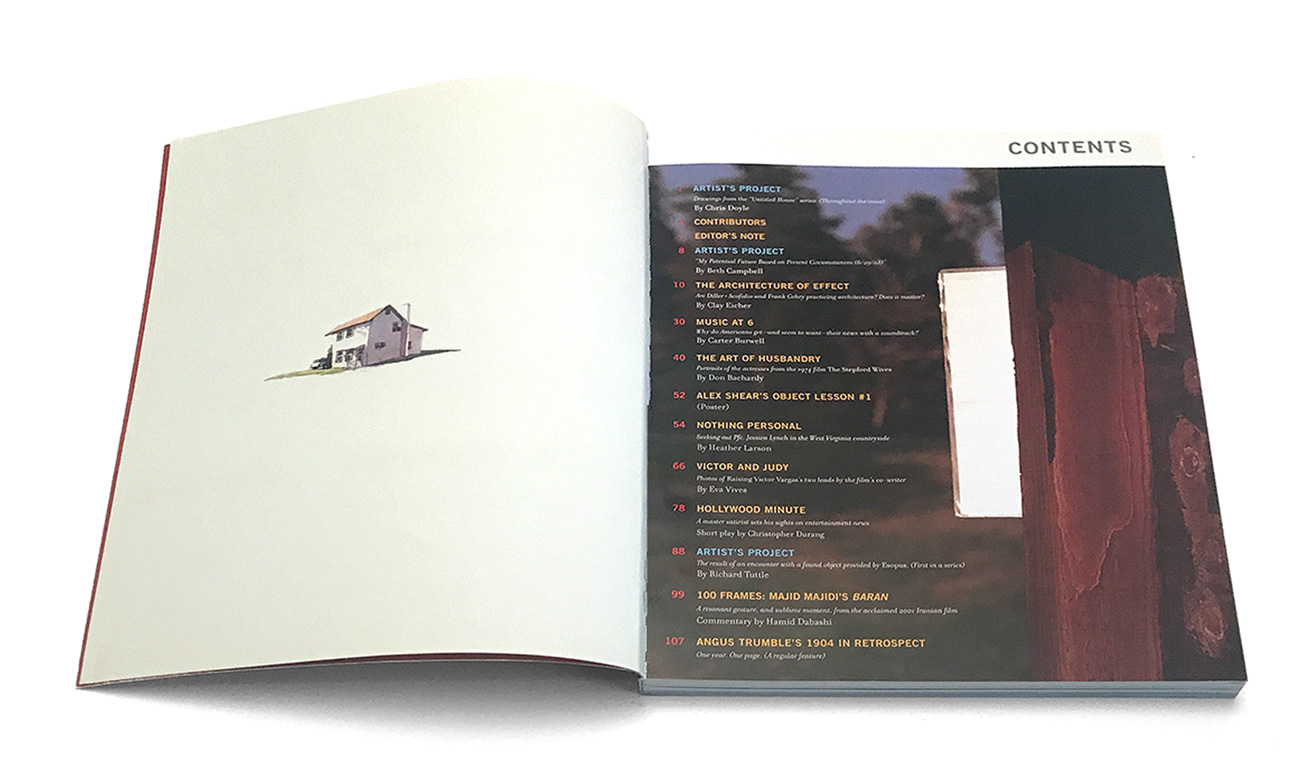
ESOPUS 1 CONTENTS
Editor’s Note
By Tod Lippy
Artist’s Project: Chris Doyle
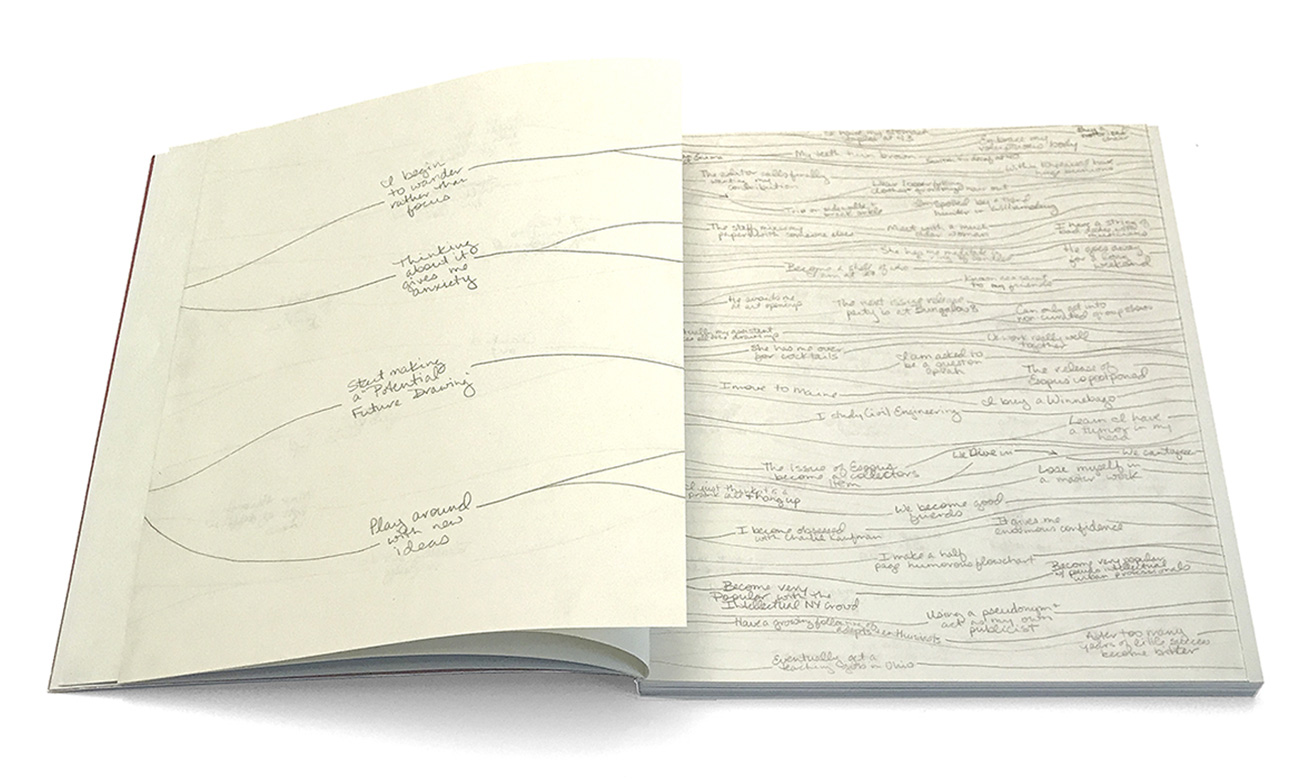
Artist’s Project: Beth Campbell
The Architecture of Effect
By Clay Eicher
Music at 6
By Carter Burwell; illustrations by Scott Menchin
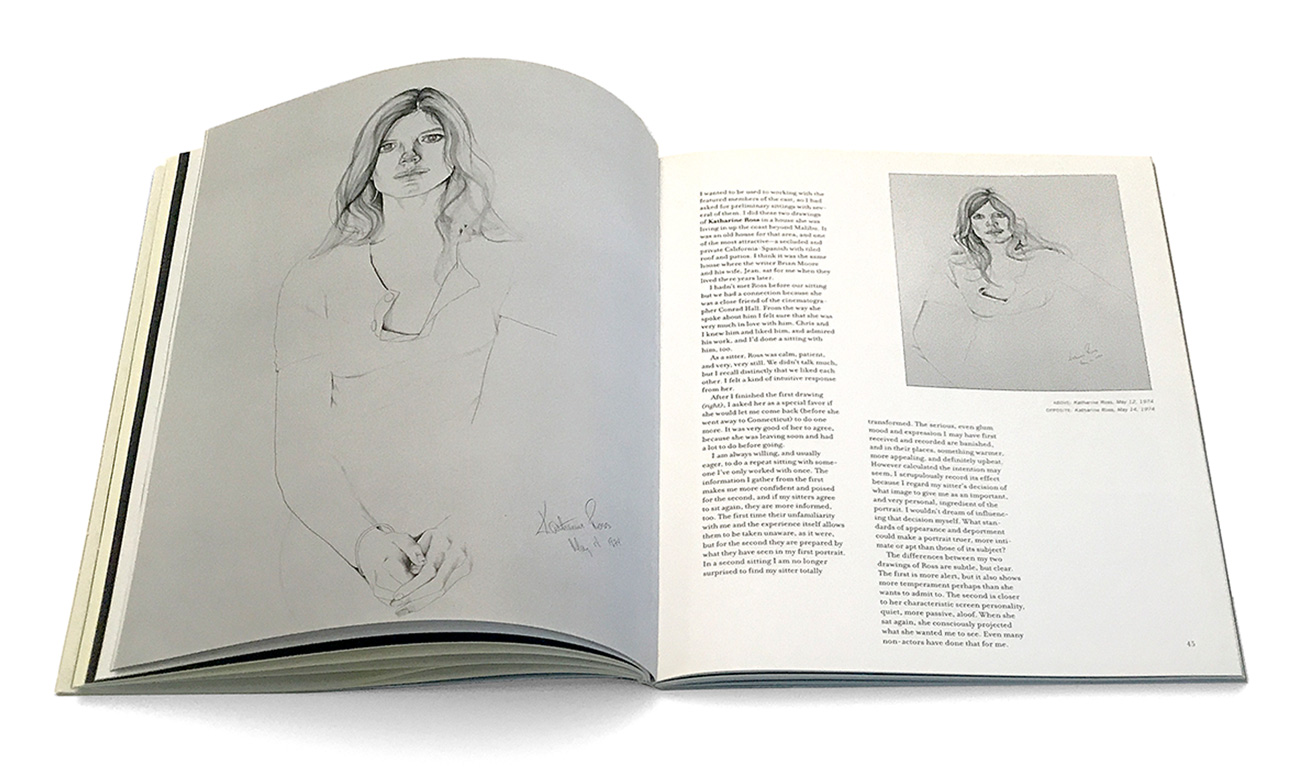
The Art of Husbandry
By Don Bachardy
Alex Shear’s Object Lesson #1
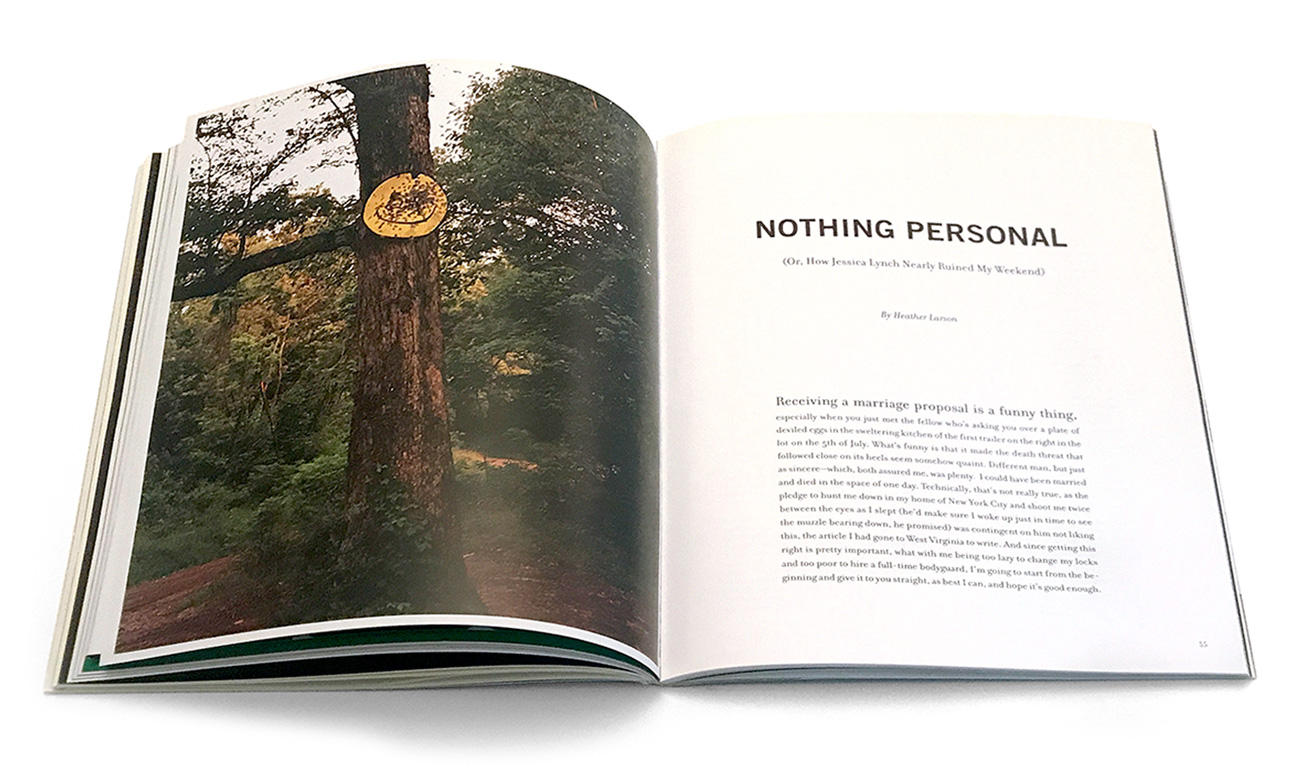
Nothing Personal
By Heather McPherson
Victor and Judy
By Eva Vives
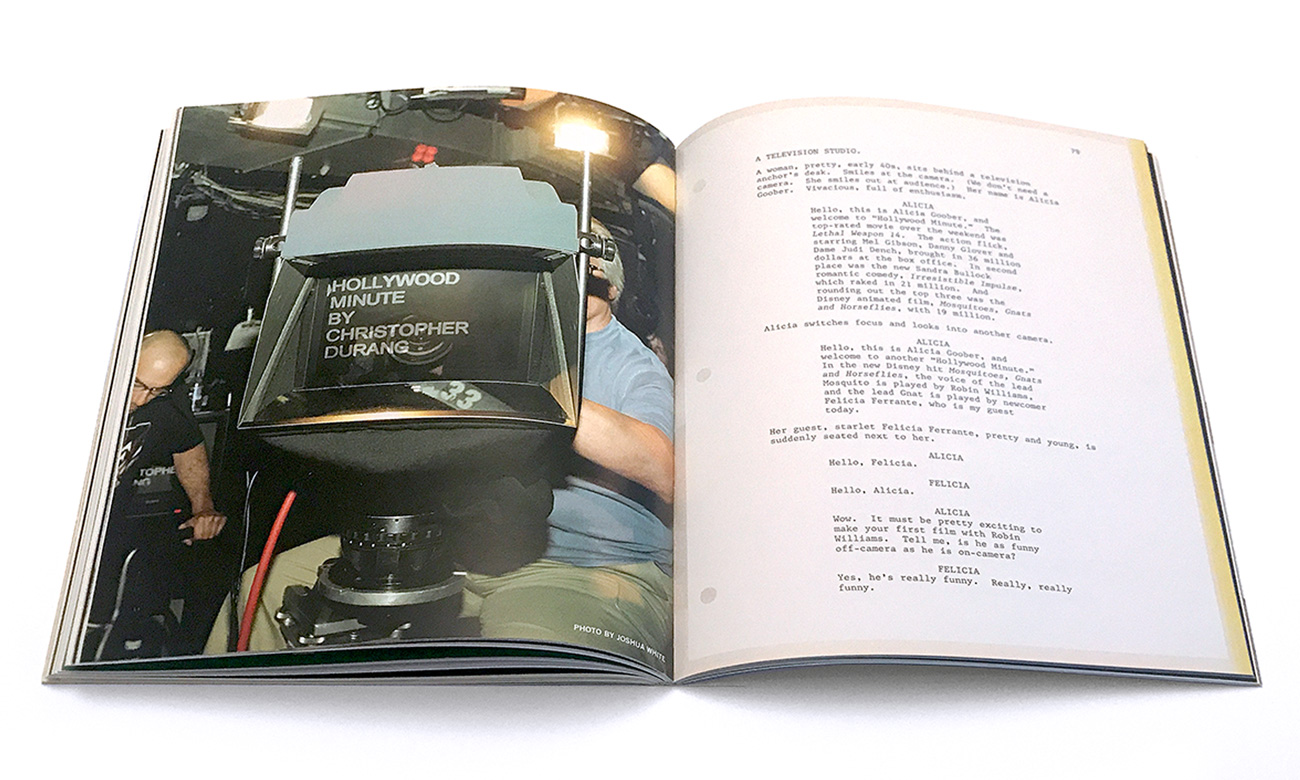
Hollywood Minute
By Christopher Durang
Artist’s Project: Richard Tuttle
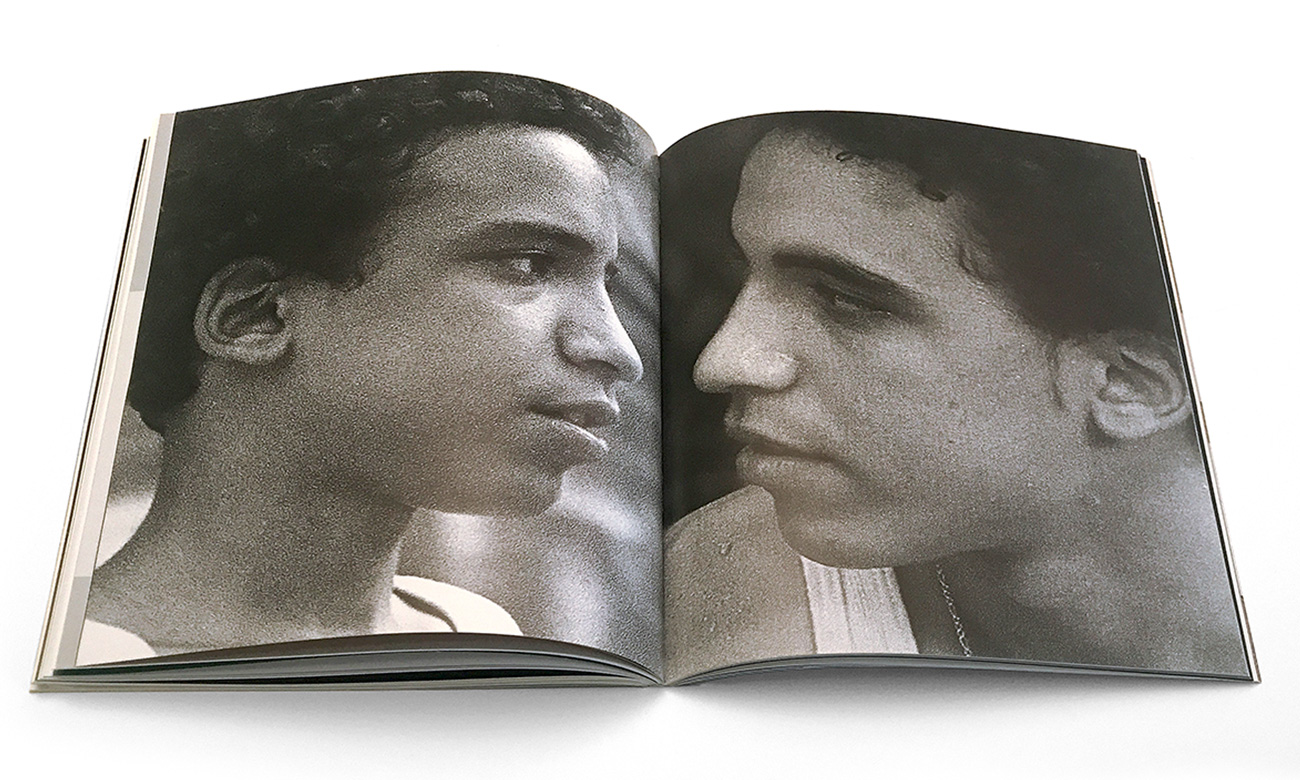
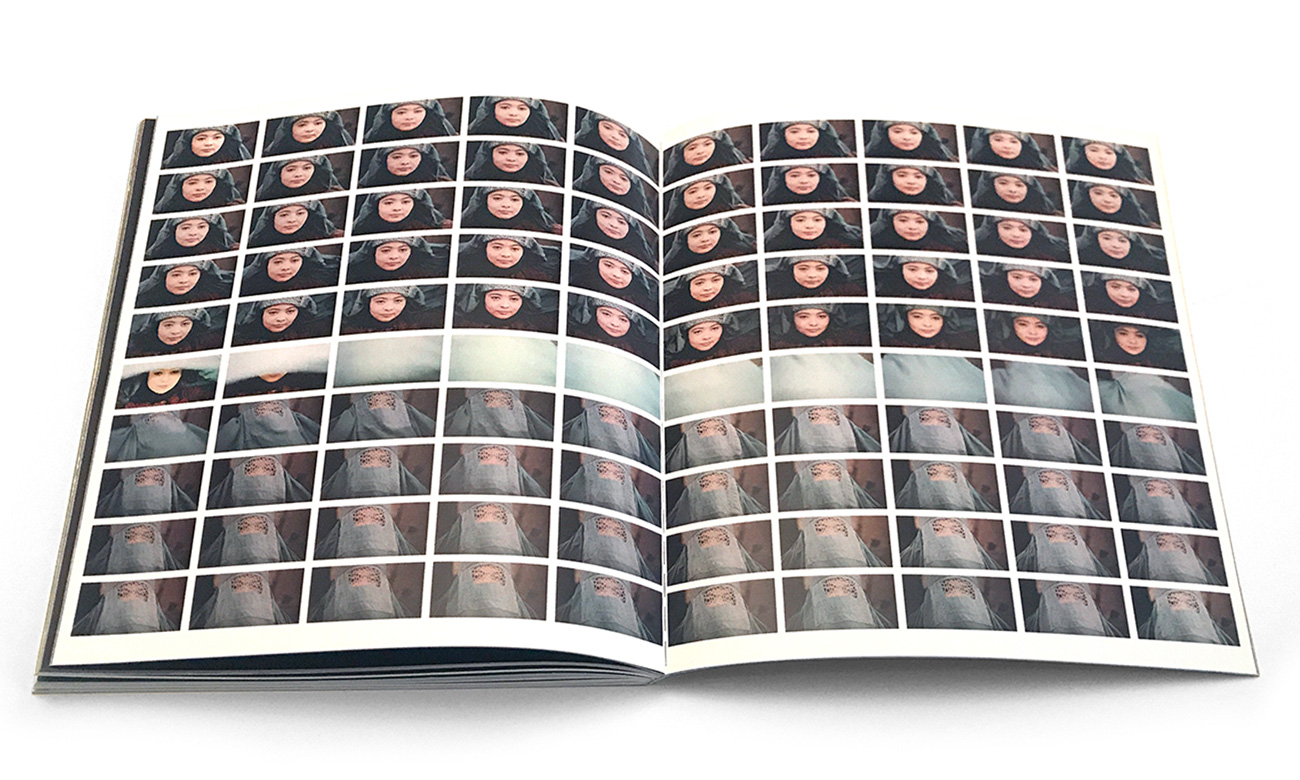
100 Frames: Baran (2001)
Film by Majid Majidi; introduction by Hamid Dabashi
Angus Trumble’s 1904 In Retrospect
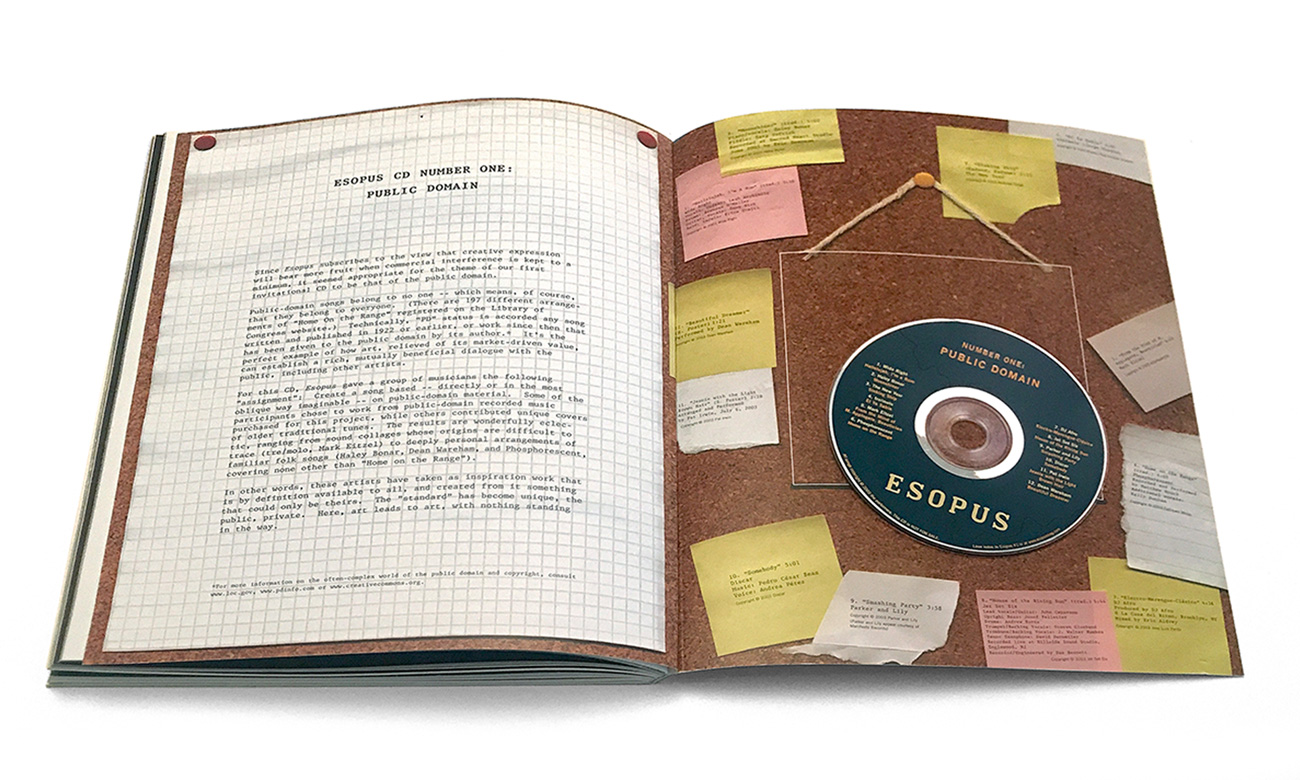
Esopus CD #1: Public Domain