Wiseman’s “Domestic Violence”
Sun, Jan 15, 2023 9:00 AM
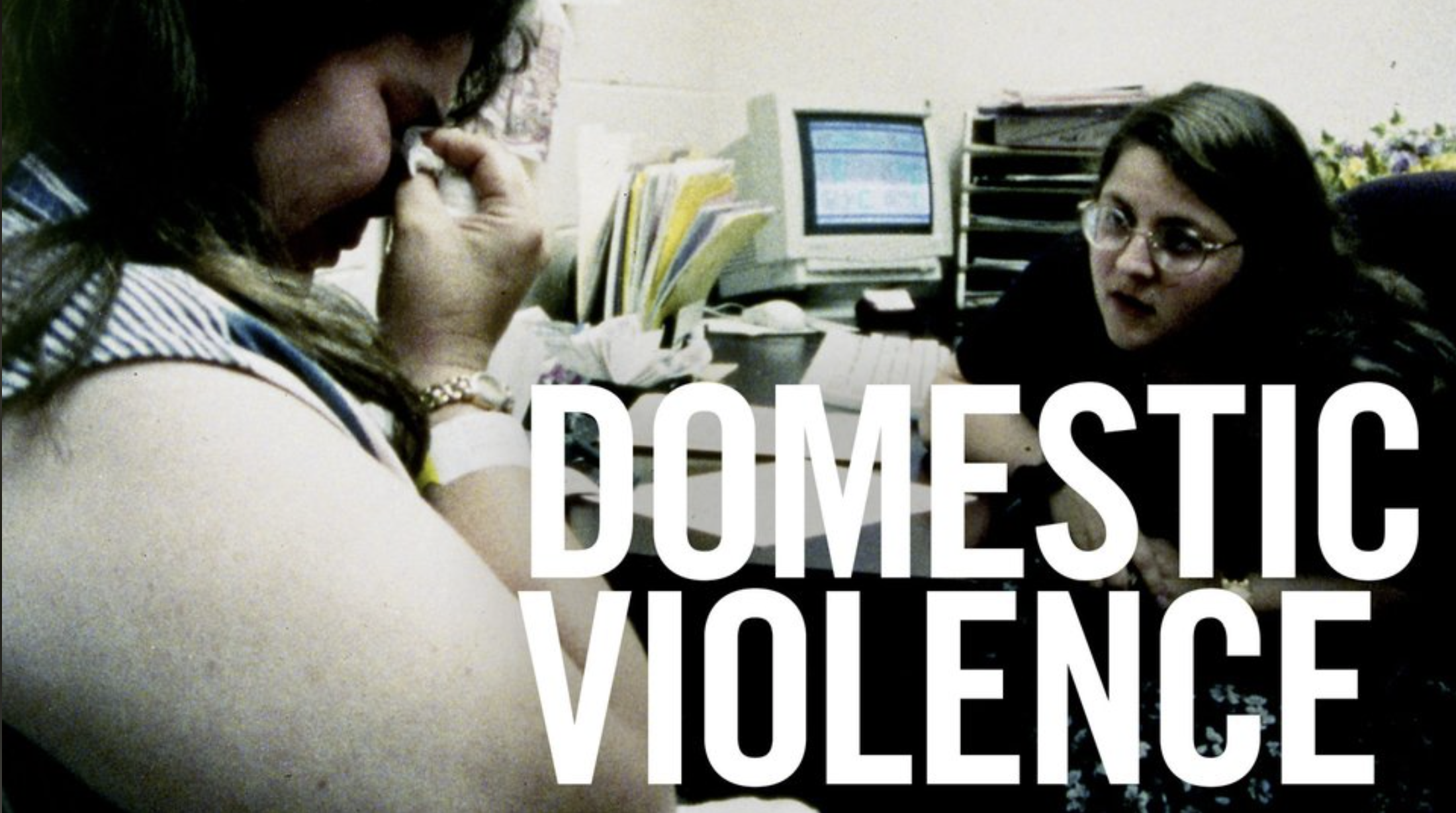
©2001 Zipporah Films
Two decades ago, I went to see Frederick Wiseman’s three-hour 2001 documentary Domestic Violence at Film Forum in NYC during its theatrical run. It was an unforgettable experience. Last night, I decided to rewatch the film, as I tend to do with all films that have that kind of effect on me.
The film was shot in and around The Spring, a shelter and counseling center for victims of domestic abuse, located in Tampa, Florida. It is classic Wiseman: patient, observational, nonjudgmental, commentary-free.
I fell in love with virtually everyone in the documentary because I could tell Wiseman loved them, too. One person who particularly struck me was a woman who has come back to the shelter because her ex-boyfriend has begun stalking her again. She is working two jobs, and the guy has somehow gotten her pager number and has started leaving her the numbers for the local funeral home, etc, on it — terrifying stuff. When she speaks to her counselor (who she continually addresses by his first name), her spirit is amazing. She is somewhat inarticulate, but clearly bright (language is cruel that way). Resilient and dynamic, she is wearied by the tenacity of this monster in her life and decentered by his refusal to let her be (“It isn’t fair; it just isn’t fair. I don’t want to move again. Why do I have to move again?”)
And then there’s the woman who’s had her throat slit (among other horrors) by a husband whom she went back to 15 times and helped get out of jail twice. She sounds rational and together, and her speech is punctuated with the epiphanies of her stay at the shelter, but you worry that what she says is more about repeating what she’s been told than relating what she’s absorbed and now believes. During her scene, her tongue involuntarily, and repeatedly, darts at the scar along her upper lip. Details like that suffuse the film.
We published 100 frames of another one of Wiseman’s masterpieces, Hospital (1970), in Esopus 22: Medicine, and in June 2015, Esopus hosted a screening of the film at the Museum of the Moving Image. Wiseman beamed in via Skype from Paris, where he was finishing post-production on In Jackson Heights, released later that year. His easy-going, generous responses to my (as I recall, not particularly great) questions only confirmed what I already knew about him from his films: He carries a deep regard and empathy for people, and that combination, sharpened by his intelligence and brilliant eye, has earned him his rightful place as the best documentarian working today.
If you haven’t seen these films, or any of Wiseman’s other documentaries, here’s a wonderful way to access nearly all of them via Kanopy (all you need is a library card — although, sadly, not one from NYPL). I would start, though, with Domestic Violence. Elvis Mitchell, writing for The New York Times, called it “the most compassionate” of his films. I agree, and after two viewings, I think it also happens to be his best effort.