Published by RC Publications, Inc., Winter 1996. Format: Perfect-bound magazine, 10.75 by 9 inches, 216 pages.
EDITOR’S NOTE
You might have noticed that all five of the films nominated for Best Picture Academy Awards this year also happened to be contenders for screenwriting Oscars. And that only three of those Best Picture nominees repeated themselves on the Best Director list. Could this indicate a subtle slippage of the premise of director-as-auteur that for so long has held sway over Hollywood? Does it signal a possible gain in recognition of the writer’s essential creative role?
We’d like to think it’s a little of both, and we’d also like to think our mission of publishing distinguished screenplays has had a little something to do with it. Our first year of publication featured scripts by Ted Tally (The Silence of the Lambs), Joan Tewkesbury (Nashville), Carole Eastman (Five Easy Pieces), Christopher McQuarrie (The Usual Suspects), Todd Haynes (Safe), Paul Attanasio (Quiz Show) and many others, not to mention keynote essays by writers like Robert Towne and David Mamet.
With this issue, Scenario commences its second year of celebrating screenwriters and their contributions to the art of film. Darnell Martin, writer/director of I Like It Like That, starts things off with her take on the “dos and don’ts” of criticism, offering some very funny anecdotes about her experiences with both the good and bad varieties during the making of that film.
Scott Frank’s Get Shorty, nominated for both Writers Guild and Golden Globe Awards, opens the issue. Frank’s adaptation of the Elmore Leonard novel about the adventures of Chili Palmer, a charismatic loan shark who decides to become a movie producer, has been praised for its fidelity to Leonard’s distinctive tone. Frank discusses the process of retaining that tone, as well as how he went about devising a number of scenes and solutions from scratch. Elmore Leonard weighs in at the end of Frank’s interview with a few comments of his own about the script.
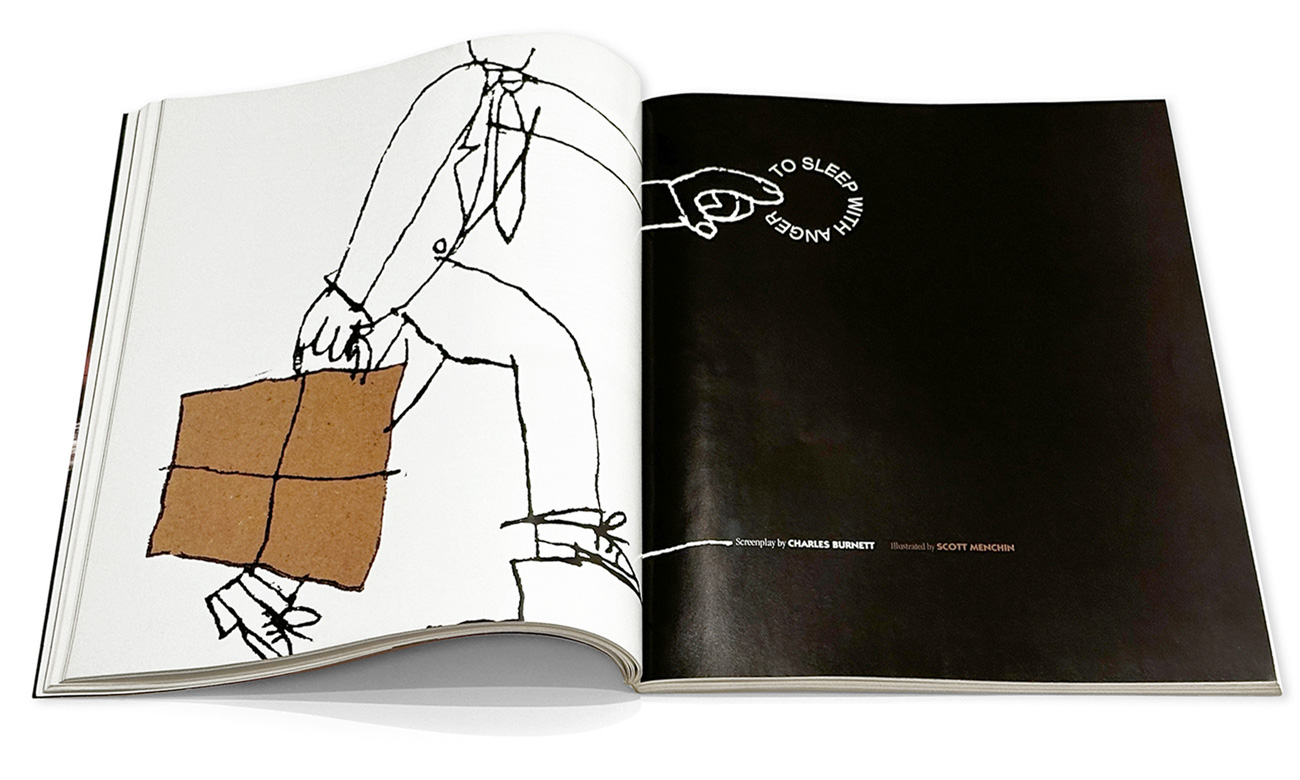
Our second screenplay is Charles Burnett’s To Sleep with Anger. Saturated with references to African American folklore (more, in fact, in the shooting script featured here than in the 1990 film), this gentle portrait of a black middle-class family thrown off-balance by a figure from their Southern past appeared on virtually every critic’s 10-best list from that year. Burnett offers his views on what he feels are the political and ethical responsibilities of the filmmaker, and shares his impressions of the advantages and disadvantages of working as an independent filmmaker.
A Little Princess, the inventive adaptation of the classic children’s book by Frances Hodgson Burnett, follows. Richard LaGravenese took on the task of adapting the book in 1990, managing to retain the story’s message about the importance of imagination and generosity (embodied in its heroine, Sara Crewe) while updating the tone of the piece to make it more relevant for children today. That process is detailed in the interview, where LaGravenese relates how his interest in mysticism and spirituality influenced his decision to flavor the story with an ancient Indian legend. Following his interview is a talk with Elizabeth Chandler, who was asked to do a production rewrite for the film when it was finally green-lit by the studio (LaGravenese was busy with Unstrung Heroes). Her comments shed light on the common, and often complex, process of rewriting another person’s work as it is ushered into readiness for production. The issue closes with Georgia, Barbara Turner’s meditation on the complex mechanics of sibling relationships, detailed in the story of Georgia, a talented and successful singer who must deal with the intense admiration, and unpredictability, of her sister, Sadie. Called “the most remarkable original screenplay of the season” by the Boston Globe, Turner’s script manages to catch the nuances of family life with unflinching candor. The subject matter is near to her: Georgia was written for her daughter, Jennifer Jason Leigh (who plays Sadie in the film), and takes much of its inspiration for that character from Turner’s eldest daughter, Carrie. Turner discusses her relationship to the material, as well as her extensive research into the music scene in Seattle (where Georgia takes place).
Here, now, a few notes about some recent comments we’ve gotten from readers (which we always welcome): First, with this issue, we’ve begun printing script titles on the spine of the magazine. Also, a reminder to those readers who have asked us to indicate the page lengths of the original screenplays: you’ll find them at the end of the writers’ biographies in the interviews.
Finally, a few of our subscribers have expressed concern that the scripts we feature in the magazine are not in “standard screenplay format.” While we can understand the reasons why some readers—especially aspiring writers—might harbor this kind of concern, we’re actually hard-pressed, after reading numerous screenplays, to ascertain what “standard” format actually is. Writers certainly have different conceptions of it: William Goldman (Butch Cassidy and the Sundance Kid) prefers not to use slug lines; Richard Curtis (Four Weddings and a Funeral) doesn’t indent dialogue; the late Walter Newman (Harrow Alley, The Magnificent Seven) never included camera directions. What these writers do share, however, is a talent for screenwriting: creating dialogue, characterizations and situations with the power to move, astonish and inspire. We’ve felt from the beginning that, owing to the editorial focus of the magazine–to provide a context in which screenwriting can be regarded as literature–our biggest concern should be less in honoring a format whose only real function is in its usefulness in readying a script for production than in devising a flexible layout which brings the “meat” of superlative screenplays—compelling content—to the fore. Any number of software programs can provide “standard” format with the flick of a return key; what is celebrated and highlighted in these pages is the much rarer, and much more significant, vision and originality of great writers.—Tod Lippy
SCENARIO VOL. 2, NO. 1 CONTENTS
Editor's Note
By Tod Lippy
Keynote Essay: That Big Bad Wolf Called Criticism
By Darnell Martin
Get Shorty
Screenplay by Scott Frank
Adapting Get Shorty
A Talk with Scott Frank
Elmore Leonard on Get Shorty
To Sleep with Anger
Screenplay by Charles Burnett
Writing & Directing To Sleep with Anger
A Talk with Charles Burnett
A Little Princess
Screenplay by Richard LaGravenese & Elizabeth Chandler
Adapting A Little Princess
A Talk with Richard LaGravenese
From Rose Petals to Snowflakes
A Talk with Elizabeth Chandler
Georgia
Screenplay by Barbara Turner
Writing Georgia
A Talk with Barbara Turner