Scenario, Vol. 3, No. 3
Published by RC Publications, Inc., Summer 1997. Format: Perfect-bound magazine, 10.75 by 9 inches, 208 pages.
EDITOR’S NOTE
In his appreciation of All About Eve that opens this issue, playwright Christopher Durang imagines the reaction studio executives and development people would have to Joseph L. Mankiewicz’s screenplay had it been written today. Mankiewicz’s use of multiple voiceovers, his dependence on dialogue for exposition, his constant shifting between past and present tense—all would be, Durang suggests, condemned and excoriated (“Show us, don’t tell us!”).
Yet Durang notes that, against all odds, Mankiewicz’s baroque screenplay structure works, and for the following reason: “Rather than following a strict rule of consistency, it feels as if Mankiewicz made his decisions…on an intuitive basis, his artist’s sense telling him what was the best way to tell the story.” Along with Mankiewicz, the writers whose work is featured in this issue share that artist’s sensibility, relying more on their innate sense of what “works”—relative to the dramatic integrity of each of these scripts—than on a series of arbitrary, deadening formulas.
Hossein Amini’s striking adaptation of Henry James’s novel The Wings of the Dove is an excellent case in point. When he read the novel, Amini, who likens the adaptation process to conveying the intensely personal reaction one has to a book the first time one reads it, was struck by the prototypical film noir elements embedded within, particularly regarding the “love triangle” of Minnie, Kate and Merton. He decided to focus on that particular aspect of the story in his screenplay, resulting in an utterly unique, and quite contemporary, reading of James—somehow faithful to the writer's intentions, while also working beautifully on its own terms.
Following The Wings of the Dove is the object of Durang’s affections: Joseph Mankiewicz’s shooting script for All About Eve. Possibly the most-quoted screenplay ever written, its power hasn’t diminished since it was first released in 1950. Eve is fueled by Mankiewicz's intense, almost obsessive interest in its subject matter: the Theater and its denizens, particularly actresses. More can be learned about Mankiewicz's feelings toward both in the excerpted 1972 interview with him which follows the screenplay, along with two entertaining and illuminating conversations with Mankiewicz’s son, Tom (a writer and director in his own right), and actress Celeste Holm, who was nominated for an Academy Award for her portrayal of Karen in the film.
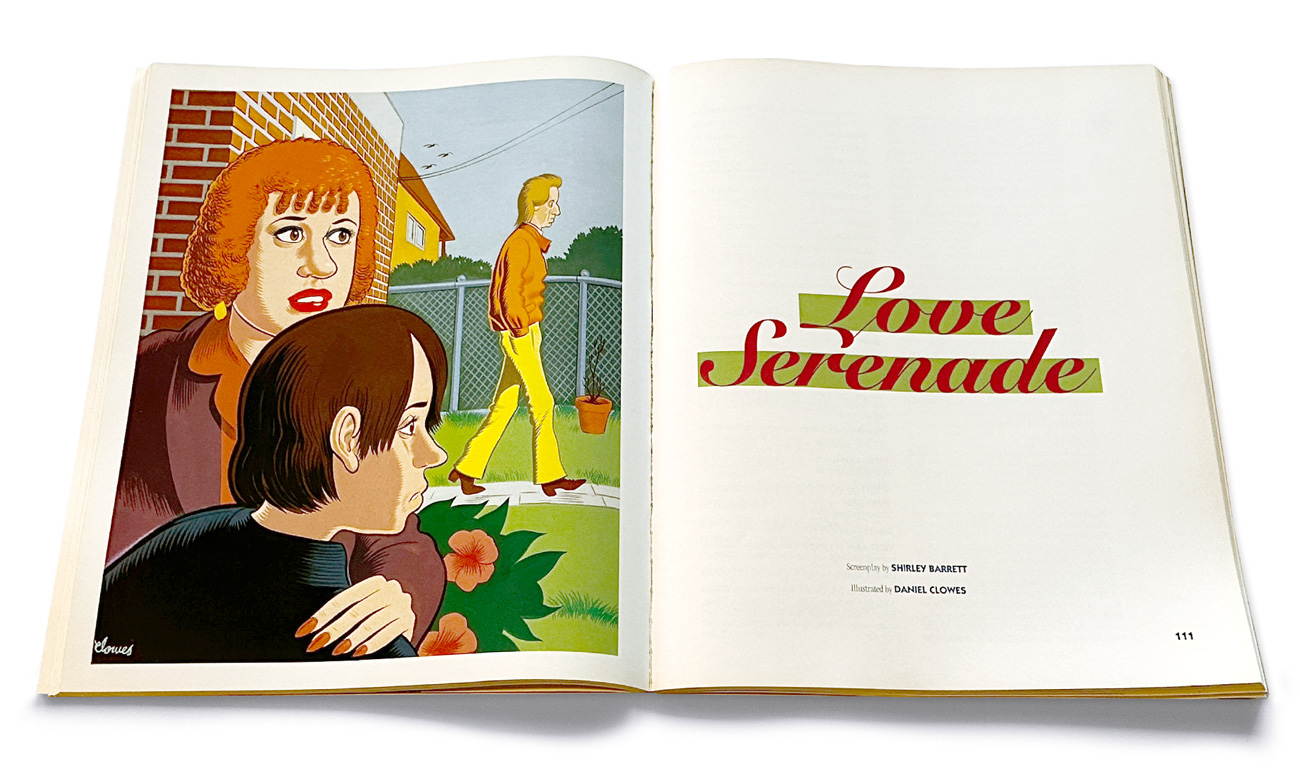
Writer/director Shirley Barrett, whose first feature, Love Serenade, appears here, shared a similar interest in taking the highly personal—in this case, her romantic misadventures as a young woman—and developing it into a refreshingly idiosyncratic, at times surrealist, black comedy that also is a perceptive study of young love and sibling dynamics. Here she discusses the writing process in detail (including her potentially risky incorporation of a plot element out of left field in the second draft), as well as the journey from script to the resultant film, which went on to win the prestigious Caméra d’Or (best first film) prize at the 1996 Cannes Film Festival.
The issue closes with another in our continuing series of unproduced screenplays: The Beautiful and Damned, adapted from the F. Scott Fitzgerald novel by the late Christopher Isherwood and Don Bachardy. Isherwood and Bachardy, companions and collaborators since the early 1950s, co-wrote several other scripts (and in fact, Isherwood himself had come close to adapting Tender is the Night for David O. Selznick decades before). As Bachardy relates in the accompanying interview, Isherwood—author of the modern masterpieces Berlin Stories, A Single Man and Down There on a Visit, among others—took screenwriting as seriously as any other form of writing. This level of commitment is evident in his and Bachardy’s meticulous, elegant adaptation, which, had it been produced, certainly had the potential of becoming the best Fitzgerald film adaptation to date.
On a final note, this issue of Scenario will be my last as editor of the magazine. I am pleased to announce my successor, Annie Nocenti (whose interviews with Hossein Amini and The Wings of the Dove director lain Softley appear here). Annie’s enormously varied and accomplished background includes writing and editing comic books, serving as script editor for the influential Fifth Night screenplay reading series in New York City, editing a number of magazines, and writing several screenplays which are currently in development. It’s a pleasure to leave the magazine in such good hands, and I’m excited to join the rest of you in looking forward to each new issue under her able guidance.—Tod Lippy
SCENARIO VOL. 3, NO. 3 CONTENTS
Editor’s Note
By Tod Lippy
Keynote Essay: “We Talked in Sentences Then!”
By Christopher Durang
The Wings of the Dove
Screenplay by Hossein Amini
Adapting The Wings of the Dove
A Talk with Hossein Amini
From Script to Film
A Talk with Director Iain Softley
All About Eve
Screenplay by Joseph L. Mankiewicz
Joseph L. Mankiewicz (1909–1993): A Biography
Acting in “Eve”
A Talk with Celeste Holm
Love Serenade
Screenplay by Shirley Barrett
Writing & Directing Love Serenade
A Talk with Shirley Barrett
The Beautiful and Damned
Screenplay by Christopher Isherwood and Don Bachardy
Adapting The Beautiful and Damned
A Talk with Don Bachardy