Published by RC Publications, Inc., Spring 1995. Format: Perfect-bound magazine, 10.75 by 9 inches, 192 pages.
EDITOR’S NOTE
There is no more crucial point in the production of a film than its opening: Will the critics respond favorably? And even if they do, will the general public show enough support to assure the film’s success? Producing the first issue of Scenario was, in a way, a similar sort of situation, and we’re happy to report that the superb response it’s received from both critics and readers has far exceeded expectations. In a recent article in The Washington Post, media critic William F. Powers called Scenario “the literary magazine of the future…The first quarterly issue has just appeared, and it is very, very good.” And The Boston Globe’s Bruce McCabe described Scenario as “handsome, glossy and thoughtfully and artfully crafted.”
Even more important, we’’ve also been receiving great reviews—as well as good advice—from our readers. One enthusiastic subscriber suggested we mention the original page length of each screenplay we publish, a suggestion we’ve taken to heart: look for the original scripts’ page lengths at the beginning of each screenwriter interview.
We hope this second issue garners a like response. It begins with a keynote essay by celebrated independent filmmaker Whit Stillman. Stillman is in the early stages of writing the screenplay for his third film (after the acclaimed Metropolitan and Barcelona) and his thoughts about “reading while writing” are both entertaining and informative.
The issue opens to the strains of “I Got You, Babe”: a musical motif familiar to anyone who saw the 1993 hit Groundhog Day. However, what won’’t be so familiar is the way in which Danny Rubin’s revised spec script actually begins. This different opening, along with several other major variations between Rubin’s script and the film, is discussed at length in the accompanying interview with the Santa Fe-based screenwriter. And, for additional insights, we also have also included the comments of Groundhog Day director Harold Ramis, who co-wrote the shooting script with Rubin. Hearing from both of them provides a fascinating dual perspective on the process of transforming a screenwriter’s vision into a studio film.
Those familiar with Frank Pierson’s work as both a screenwriter (Cool Hand Luke, Dog Day Afternoon) and a director (A Star is Born, Citizen Cohn), will be eager to read 1-800-, an unproduced screenplay by Pierson written in 1979. The protagonist—a televangelist who suffers a crisis of faith—is one in a long line of Pierson “anti-heros,” and this writer’s candid remarks regarding the character’s similarities to characters in his other films, as well as his thoughts as to why the screenplay was never made, are presented here.
One of the most celebrated independent films of 1994—winner of both the Grand Jury Prize and the Waldo Salt Award for screenwriting at the 1994 Sundance Film Festival—Tom Noonan’s What happened was... is a perceptive study, funny and harrowing in turn, of two “lonely, damaged” people struggling to survive their first date. Noonan calls the character of Michael, who he played in the film, “totally autobiographical”: his close connection to the material, in both a personal and professional sense (Noonan also directed, edited and composed the soundtrack for the final film), is discussed at length.
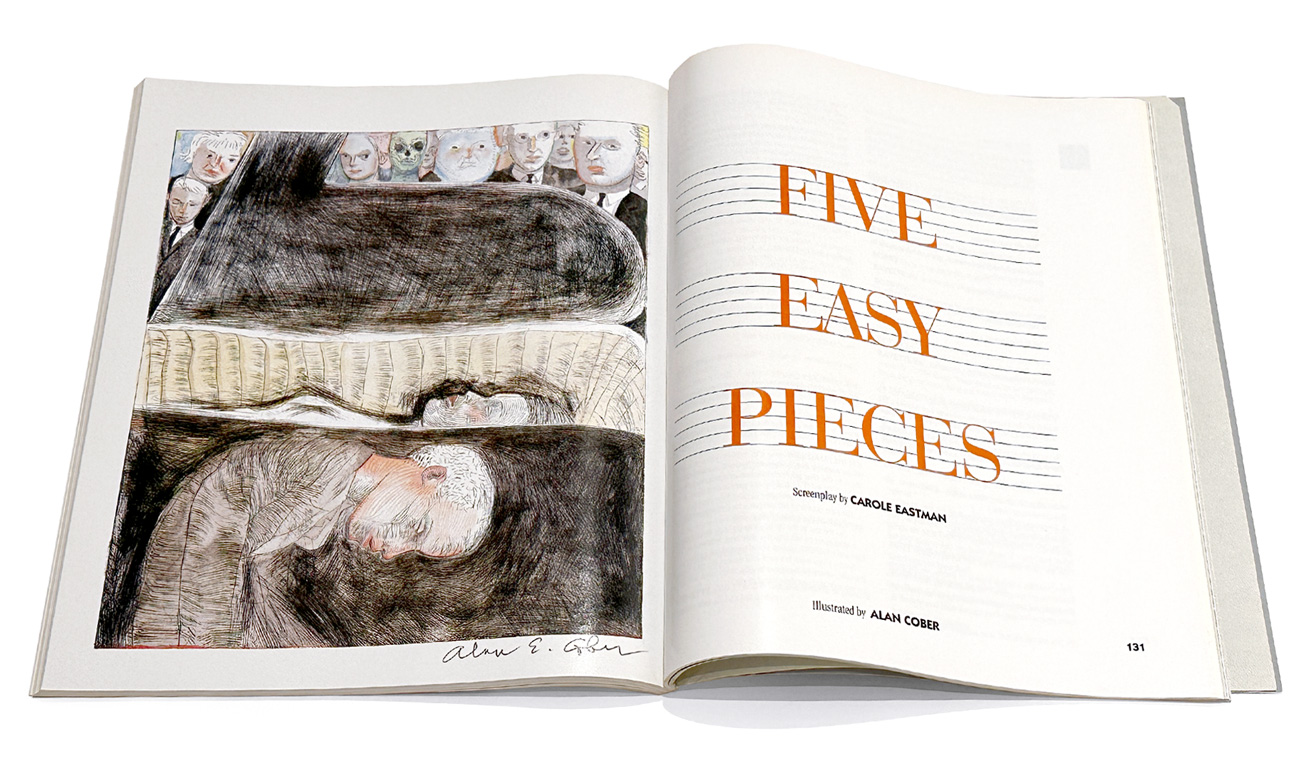
Carole Eastman’s screenplay for Five Easy Pieces makes its first appearance in print on the film’s 25th anniversary. This Academy Award-nominated script includes Eastman’s surprising—and moving—credit sequence, which was never shot for the film. The inspirations for the character of Bobby, as well as a series of anecdotes about the process of writing the script, make Eastman’s interview required reading for the many devotees of this classic 1970 film.
Finally, we close the issue with a bonus for our readers: Prostitutes, a short unproduced screenplay by Stacy Cochran (My New Gun, Boys)—the first in our “Short Take” series of short-film scripts of quality that we will publish periodically.
Our next (Summer) issue will feature four screenplays from the 1995 Sundance Film Festival, and will open with a keynote essay by Sundance founder Robert Redford. Come Fall, look for our first annual Writers Guild issue, including several nominees from this past year’s awards.
These and future issues will be filled, as always, with the finest screenplays, produced and unproduced, of classic movies, current studio releases, and independent and foreign films. We’re sure you have some ideas about screenplays we ought to be considering for publication in upcoming issues. We welcome your suggestions!—Tod Lippy
Related
SCENARIO VOL. 1, NO. 2 CONTENTS
Editor's Note
By Tod Lippy
Keynote Essay: Reading While Writing
By Whit Stillman
Groundhog Day
Written by Danny Rubin
Writing Groundhog Day
A Talk with Danny Rubin
Harold Ramis on Groundhog Day
By Tod Lippy
1-800
Screenplay by Frank Pierson
Writing 1-800-
A Talk with Frank Pierson
What Happened Was...
Screenplay by Tom Noonan
Writing & Directing What Happened Was...
A Talk with Tom Noonan
Five Easy Pieces
Screenplay by Carole Eastman
Writing Five Easy Pieces
A Talk with Carole Eastman
Short Takes: Prostitutes
Screenplay by Stacy Cochran