Published by RC Publications, Inc., Summer 1995. Format: Perfect-bound magazine, 10.75 by 9 inches, 208 pages.
EDITOR’S NOTE
It was at a panel discussion following the screening of one of his films at the 1988 Sundance Film Festival that maverick filmmaker Samuel Fuller (Shock Corridor, Pickup on South Street, White Dog) stated: “Independent film refers to independence of ideas.” It was apt that those words were spoken at Sundance: ever since Robert Redford’s founding of the Sundance Institute in 1981, its imprimatur has been associated with films that look beyond, and work around, the formulas, concepts and values that define the studio system. The four scripts from the 1995 Sundance Festival featured here are no exception to that rule.
Our issue is keynoted by an interview with Sundance founder Robert Redford, who shares his candid views on how and why he feels the Institute is so important to the health and diversity of American filmmaking. For a firsthand account of the unique process behind the Institute’s annual June Filmmakers Lab, read the collection of comments from some of this year’s attendees found at the end of the Redford interview.
This issue opens with The Usual Suspects, which generated a tremendous audience response after its world premiere at this year’s Festival. Written by Christopher McQuarrie, who co-wrote the 1993 Sundance Festival's Grand Jury Prize winner, Public Access, this ingeniously structured script will keep readers guessing up until the last page as to the identity of a mysterious figure who has a malignant effect on the lives of five career criminals. McQuarrie talks about the genesis of the idea for the film (which first came to him while waiting in line for a film at Sundance), as well as his longstanding creative partnership with the film’s director, Bryan Singer.
There is a substantial shift in tone from this script to the issue’s next, James Mangold’s Heavy. This tender story about an overweight cook’s struggle to attain a degree of independence and self-confidence was featured in this year’s dramatic competition, winning a Special Jury Prize for direction. Mangold’s reasons for devising an innovative screenplay format, as well as his disillusionment with several years spent in Hollywood, are discussed in his interview.
Winner of this year’s coveted Audience Award, Picture Bride is the story of a young Japanese woman’s struggle to acclimate to an arranged marriage in plantation-era Hawai’i. Its director, Kayo Hatta, and her sister and co-screenwriter,
Mari Hatta, discuss the almost unbelievable series of circumstances which led to its completion, as well as relating the reasons—creative and financial—why a substantial number of scenes in the screenplay featured here were cut from the finished film.
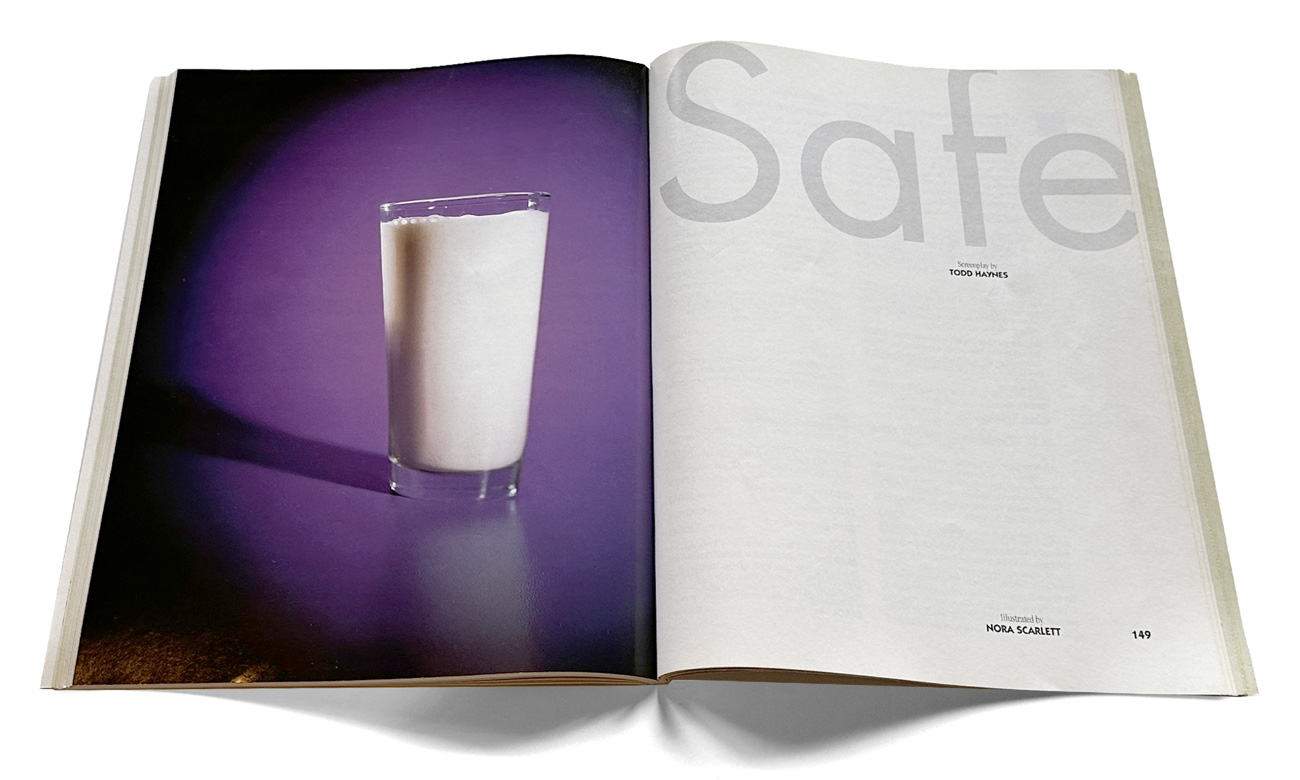
Todd Haynes is no stranger to Sundance: at the 1991 Festival, his controversial feature-length debut Poison was given the Grand Jury Prize. This year, Haynes returned with Safe, the Festival’s Centerpiece Premiere. Safe’s ostensible subject is environmental illness and its effect on the life of an upper-middle-class housewife living in the San Fernando Valley, but this deeply considered project explores many other issues along the way. Haynes discusses the film’s relation to his other work, as well as to more conventional Hollywood product treating similar subjects, in the accompanying interview.
The diversity of the films whose screenplays are featured here not only reflects the breadth and range of the work supported by Sundance; it mirrors our culture’s diversity—a fundamental goal of the Institute since its inception. The wide variety of subjects, themes and purposes among these four scripts attests, indeed, to the “independence of ideas” possessed by their creators. One of their greatest values is in serving to remind us that such a stance is as valid and necessary in life as it is in art.—Tod Lippy
Related
SCENARIO VOL. 1, NO. 3 CONTENTS
Editor's Note
By Tod Lippy
Keynote Interview: Viewing Sundance
A Talk with Robert Redford
The Usual Suspects
Screenplay by Christopher McQuarrie
Writing The Usual Suspects
A Talk with Christopher McQuarrie
Heavy
Screenplay by James Mangold
Writing Heavy
A Talk with James Mangold
Picture Bride
Screenplay by Kayo Hatta and Mari Hatta
Writing Picture Bride
A Talk with Kayo Hatta and Mari Hatta
Safe
Screenplay by Todd Haynes
Writing & Directing Safe
A Talk with Todd Haynes
Report from Provo Canyon